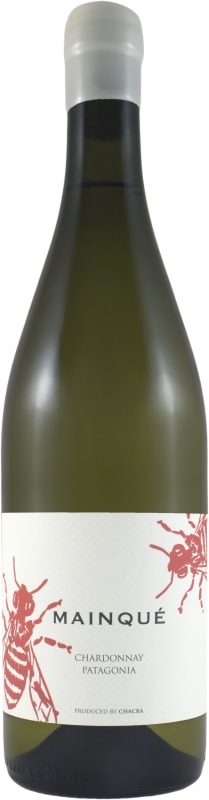


Winemaker Notes
Done in collaboration with Jean-Marc Roulot, was picked early as the grapes ripened early but maintained acidity. Fermented in barrel without malolactic, spending 11 months in barrique, this has an up-front fruit, a salinity shared with Chacra Chardonnay, and a tasty finish lent by the calcareous components of the alluvial soil.
Professional Ratings
-
James Suckling
Such a flinty nose that delivers a full package of minerality. Quarry, chalk, gun powder and lime. The nose really speaks to you. Creamy and textured on the palate with bright but chiselled acidity and real tension. One of the best Mainque’s ever? Chacra’s answer to fine Chablis. Drink or hold. From biodynamically grown grapes.


One of the most popular and versatile white wine grapes, Chardonnay offers a wide range of flavors and styles depending on where it is grown and how it is made. While it tends to flourish in most environments, Chardonnay from its Burgundian homeland produces some of the most remarkable and longest lived examples. California produces both oaky, buttery styles and leaner, European-inspired wines. Somm Secret—The Burgundian subregion of Chablis, while typically using older oak barrels, produces a bright style similar to the unoaked style. Anyone who doesn't like oaky Chardonnay would likely enjoy Chablis.

One of the most southerly regions on the globe for fine wine production, Patagonia has experienced extraordinary vineyard expansion since the early 2000s.
Patagonia vineyards occupy the lower foothills of the Andes at 1,000 to 1,600 feet. Here cold air drops at night from incredibly steep elevations—the Andes reach well over 15,000 feet in this zone—a phenomenon that produces drastic diurnal shifts. Cold nights contrasted with hot summer days produce grapes with striking color, full ripeness, great finesse and aromatic intensity.
Favored for its luxury brands, the Patagonia wine growing region of Argentina focuses on a diverse array of international varieties: Chardonnay, Sauvignon Blanc, Semillón and Viognier among the white grapes, and Cabernet Franc, Malbec, Merlot, Pinot Noir, Syrah and Cabernet Sauvignon for reds.