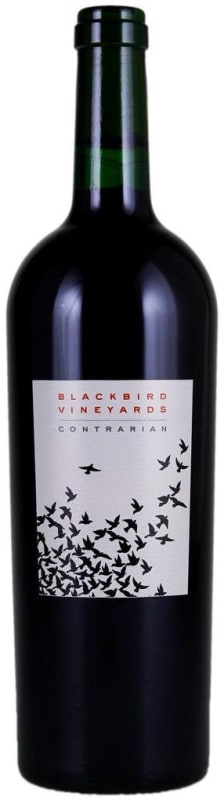


Winemaker Notes
Contrarian is bursting with black currant, blackberry, clove, vanilla, nutmeg, toffee, cherry, forest floor, violets, a very soft entry. Black truffle, forest floor, porcini mushroom continue to shine and then compliment the cherry, plum, and cocoa on the long finish.
Blend: 87% Cabernet Sauvignon, 8% Cabernet Franc, 5% Merlot
Professional Ratings
-
James Suckling
Attractively ripe, sweet-smelling aromas of blueberries and blackberries with a brambly edge. The palate has such succulent, complex and complete style with a super juicy, lithe edge to the pure black cherries and blackcurrants. Some plums and chocolate to close. A blend of 70% cabernet sauvignon, 29% cabernet franc and 1% merlot. Drink or hold.
-
Robert Parker's Wine Advocate
A blend of 70% Cabernet Sauvignon, 29% Cabernet Franc and 1% Merlot, the 2017 Contrarian Proprietary Red sports a deep garnet-purple color. It needs a little coaxing to reveal notes of baked blackcurrants, fruitcake and tilled soil with hints of fallen leaves, yeast extract and dark chocolate. Medium to full bodied, the palate has a core of taut, muscular black fruit with firm, grainy tannins and bold freshness, finishing on a provocative mineral note.
Rating: 92+ -
Jeb Dunnuck
Based on 70% Cabernet Sauvignon, 29% Cabernet Franc, and just a splash of Merlot, the 2017 Contrarian Proprietary Red has a bright, juicy style as well as notes of black plums, currants, ground herbs, and dark chocolate. It's nicely concentrated, has elevated acidity, good purity, and fine tannins. It's going to age for 15-20 years at a minimum.


Undoubtedly proving its merit over and over, Napa Valley is a now a leading force in the world of prestigious red wine regions. Though Cabernet Sauvignon dominates Napa Valley, other red varieties certainly thrive here. Important but often overlooked include Merlot and other Bordeaux varieties well-regarded on their own as well as for their blending capacities. Very old vine Zinfandel represents an important historical stronghold for the region and Pinot noir is produced in the cooler southern parts, close to the San Pablo Bay.
Perfectly situated running north to south, the valley acts as a corridor, pulling cool, moist air up from the San Pablo Bay in the evenings during the hot days of the growing season, which leads to even and slow grape ripening. Furthermore the valley claims over 100 soil variations including layers of volcanic, gravel, sand and silt—a combination excellent for world-class red wine production.