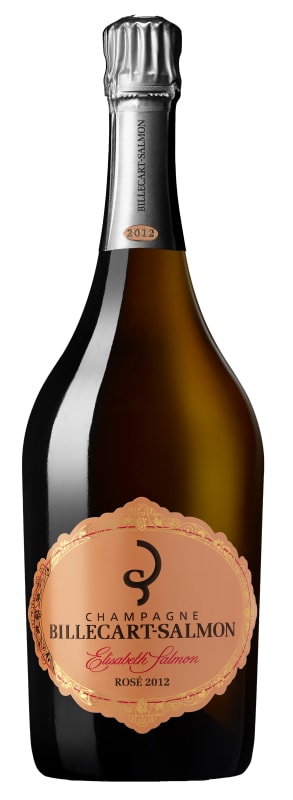


Winemaker Notes
Created in 1988 as a tribute to Elisabeth Salmon, one of the domaine's founders, this cuvée is set apart by its radiance, refined purity as well as unique character. It embodies with subtlety the signature of their top Pinot Noir and Chardonnay terroirs. Allowing time to play its role is behind the grandeur of this vintage cuvée.
The presence of an ancestral savoir-faire is recognized through the art of assemblage and rigorous selection from an exceptional harvest. This cuvée stands out for its sparkle and purity that reveal a noble, unique character.
Unlock the secrets of your cuvée with MyOrigin. Your digital tool to discover the Champagne you’re about to taste, down to every last detail: grape varieties, dosage, disgorgement date, number of vintages contained in each cuvée, total sugar and food pairings. Billecart-Salmon reveals everything in full transparency thanks to the 6-digit number located on the back label of your bottle, magnum or jeroboam.
Professional Ratings
-
Vinous
The 2012 Brut Rosé Cuvée Elizabeth Salmon offers up hints of red berry fruit, ginger, spice, rosewater, mint and crushed flowers. There is a feeling of classic austerity that runs through the 2012. I would prefer to cellar this for at least a few years, as it is quite reticent at this stage. Chalk, mint, white pepper and bright saline accents linger on the pointed finish. Dosage is 3.8 grams per liter. Disgorged: first trimester 2023.
-
Wine Enthusiast
First produced in 1988 and made only in top years, this Champagne is named after the producer’s founder. With age (more than nine years on lees), it has developed a patina of toastiness and roundness. There is a toasty character that chimes with this fine wine’s crisp texture.
-
Wine Spectator
Sleek and elegant, with a seamless knit, this is finely textured, with the raw silk–like mousse carrying flavors of peach skin, white cherry and toast point that show hints of white blossoms, pickled ginger and oyster shell through the lasting finish.
-
Robert Parker's Wine Advocate
Disgorged in January 2023 with dosage of 3.8 grams per liter, Billecart’s 2012 Rosé Elisabeth Salmon is a dramatic, extroverted wine, soaring from the glass with a bouquet of raspberry, cherry and pink grapefruit mingled with spices and red blossoms. These aromatics usher in a medium- to full-bodied, rich and fleshy palate that is animated by succulent yet vibrant acidity and a sweet-toned core of fruit. The wine concludes with an enveloping, perfumed finish that lingers with considerable persistence. It currently exhibits less depth than the Louis Salmon of the same vintage, leading me to place greater confidence in the latter.


What are the different types of sparkling rosé wine?
Rosé sparkling wines like Champagne, Prosecco, Cava, and others make a fun and festive alternative to regular bubbles—but don’t snub these as not as important as their clear counterparts. Rosé Champagnes (i.e., those coming from the Champagne region of France) are made in the same basic way as regular Champagne, from the same grapes and the same region. Most other regions where sparkling wine is produced, and where red grape varieties also grow, also make a rosé version.
How is sparkling rosé wine made?
There are two main methods to make rosé sparkling wine. Typically, either white wine is blended with red wine to make a rosé base wine, or only red grapes are used but spend a short period of time on their skins (maceration) to make rosé colored juice before pressing and fermentation. In either case the base wine goes through a second fermentation (the one that makes the bubbles) through any of the various sparkling wine making methods.
What gives rosé Champagne and sparkling wine their color and bubbles?
The bubbles in sparkling wine are formed when the base wine undergoes a secondary fermentation, which traps carbon dioxide inside the bottle or fermentation vessel. During this stage, the yeast cells can absorb some of the wine’s color but for the most part, the pink hue remains.
How do you serve rosé sparkling wine?
Treat rosé sparkling wine as you would treat any Champagne, Prosecco, Cava, and other sparkling wine of comparable quality. For storing in any long-term sense, these should be kept at cellar temperature, about 55F. For serving, cool to about 40F to 50F. As for drinking, the best glasses have a stem and a flute or tulip shape to allow the bead (bubbles) and beautiful rosé hue to show.
How long do rosé Champagne and sparkling wine last?
Most rosé versions of Prosecco, Champagne, Cava or others around the “$20 and under” price point are intended for early consumption. Those made using the traditional method with extended cellar time before release (e.g., Champagne or Crémant) can typically improve with age. If you are unsure, definitely consult our Customer Care team for guidance.

Associated with luxury, celebration, and romance, the region, Champagne, is home to the world’s most prized sparkling wine. In order to bear the label, ‘Champagne’, a sparkling wine must originate from this northeastern region of France—called Champagne—and adhere to strict quality standards. Made up of the three towns Reims, Épernay, and Aÿ, it was here that the traditional method of sparkling wine production was both invented and perfected, birthing a winemaking technique as well as a flavor profile that is now emulated worldwide.
Well-drained, limestone and chalky soil defines much of the region, which lend a mineral component to its wines. Champagne’s cold, continental climate promotes ample acidity in its grapes but weather differences from year to year can create significant variation between vintages. While vintage Champagnes are produced in exceptional years, non-vintage cuvées are produced annually from a blend of several years in order to produce Champagnes that maintain a consistent house style.
With nearly negligible exceptions, . These can be blended together or bottled as individual varietal Champagnes, depending on the final style of wine desired. Chardonnay, the only white variety, contributes freshness, elegance, lively acidity and notes of citrus, orchard fruit and white flowers. Pinot Noir and its relative Pinot Meunier, provide the backbone to many blends, adding structure, body and supple red fruit flavors. Wines with a large proportion of Pinot Meunier will be ready to drink earlier, while Pinot Noir contributes to longevity. Whether it is white or rosé, most Champagne is made from a blend of red and white grapes—and uniquely, rosé is often produce by blending together red and white wine. A Champagne made exclusively from Chardonnay will be labeled as ‘blanc de blancs,’ while ones comprised of only red grapes are called ‘blanc de noirs.’