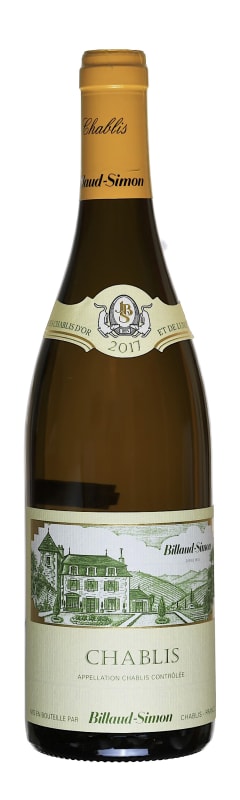


Winemaker Notes
Beautiful yellow color with pale green reflections. The nose is alluring with a distinctive Chablis style of vine peaches, banana, citrus and a touch of brioche. The palate is well-balanced between richness, freshness and elegance. The rich and supple texture lingers on the end palate. Intense ripe fruits blend with vanilla, mineral and vegetal notes and complement the wine’s soft structure.
Professional Ratings
-
Robert Parker's Wine Advocate
Aromas of sweet citrus oil, iodine and smoke introduce the 2017 Chablis Villages (Maison), a medium to full-bodied, elegantly textural wine with a youthfully tight-knit profile and a saline finish. This contains some purchased fruit and is vinified and raised in stainless steel tanks.


One of the most popular and versatile white wine grapes, Chardonnay offers a wide range of flavors and styles depending on where it is grown and how it is made. While it tends to flourish in most environments, Chardonnay from its Burgundian homeland produces some of the most remarkable and longest lived examples. California produces both oaky, buttery styles and leaner, European-inspired wines. Somm Secret—The Burgundian subregion of Chablis, while typically using older oak barrels, produces a bright style similar to the unoaked style. Anyone who doesn't like oaky Chardonnay would likely enjoy Chablis.

The source of the most racy, light and tactile, yet uniquely complex Chardonnay, Chablis, while considered part of Burgundy, actually reaches far past the most northern stretch of the Côte d’Or proper. Its vineyards cover hillsides surrounding the small village of Chablis about 100 miles north of Dijon, making it actually closer to Champagne than to Burgundy. Champagne and Chablis have a unique soil type in common called Kimmeridgian, which isn’t found anywhere else in the world except southern England. A 180 million year-old geologic formation of decomposed clay and limestone, containing tiny fossilized oyster shells, spans from the Dorset village of Kimmeridge in southern England all the way down through Champagne, and to the soils of Chablis. This soil type produces wines full of structure, austerity, minerality, salinity and finesse.
Chablis Grands Crus vineyards are all located at ideal elevations and exposition on the acclaimed Kimmeridgian soil, an ancient clay-limestone soil that lends intensity and finesse to its wines. The vineyards outside of Grands Crus are Premiers Crus, and outlying from those is Petit Chablis. Chablis Grand Cru, as well as most Premier Cru Chablis, can age for many years.