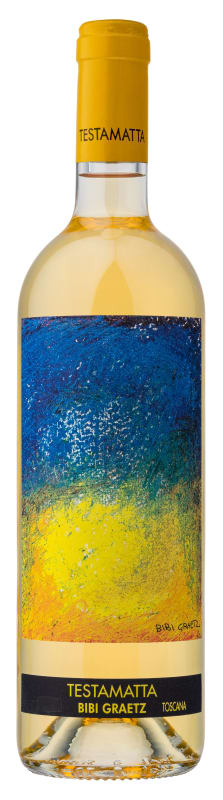


Winemaker Notes
Tight and focused, this white wine made of 100% Ansonica presents flavors of stone and minerals alongside lightly baked apples, hints of chocolate, and toasted oak. Full-bodied and fresh.
Professional Ratings
-
James Suckling
Intense aromas of white pineapple, lemon peel, white peaches and stones with a seashell undertone. Full-bodied yet still agile and vivid, showing beautiful mouthfeel and length. Salty at the end. Love the finish. Pure and unique. One of Tuscany's top whites from the island of Giglio. Made from ansonica grapes.
-
Robert Parker's Wine Advocate
This is one of those wines that is so viscerally linked to a sense of place, you actually feel transported there when you taste it. The 2017 Testamatta Bianco Isola del Giglio takes you on a momentary holiday to the Serrone vineyard on the beautiful Giglio Island off the coast of Tuscany. This is a terrestrial paradise where azure sea waves lap up against rounded granite rocks dotted with prickly pears, caper shrubs and 90-year-old grapevines. Testamatta Bianco is a pure expression of Ansonica from this one vineyard site on the southern and most remote side of the island facing the open Tyrrhenian Sea. Grapes are harvested by hand in extreme conditions and are both fermented and aged in neutral oak, with a small part in stainless steel just to loosen the wine's texture up a bit. The bouquet offers fragrant tones of apricot, honey and candied orange peel. This is a medium to almost full-bodied white with a touch of tannic structure that adds a bit of crunch and snap to the palate. However, what I find most alluring of all are those briny, sea salt flavors that are so deftly put on prominent display. There is no other white wine quite like this. A mere 2,200 bottles exist. It tastes as if you were eating a beautifully ripe summer peach while splashing around in foamy sea surf.


There are hundreds of white grape varieties grown throughout the world. Some are indigenous specialties capable of producing excellent single varietal wines. Each has its own distinct viticultural characteristics, as well as aroma and flavor profiles.

One of the most iconic Italian regions for wine, scenery and history, Tuscany is the world’s most important outpost for the Sangiovese grape. Tuscan wine ranges in style from fruity and simple to complex and age-worthy, Sangiovese makes up a significant percentage of plantings here, with the white Trebbiano Toscano coming in second.
Within Tuscany, many esteemed wines have their own respective sub-zones, including Chianti, Brunello di Montalcino and Vino Nobile di Montepulciano. The climate is Mediterranean and the topography consists mostly of picturesque rolling hills, scattered with vineyards.
Sangiovese at its simplest produces straightforward pizza-friendly Tuscan wines with bright and juicy red fruit, but at its best it shows remarkable complexity and ageability. Top-quality Sangiovese-based wines can be expressive of a range of characteristics such as sour cherry, balsamic, dried herbs, leather, fresh earth, dried flowers, anise and tobacco. Brunello, an exceptionally bold Tuscan wine, expresses well the particularities of vintage variations and is thus popular among collectors. Chianti is associated with tangy and food-friendly dry wines at various price points. A more recent phenomenon as of the 1970s is the “Super Tuscan”—a red wine made from international grape varieties like Cabernet Sauvignon, Merlot, Cabernet Franc and Syrah, with or without Sangiovese. These are common in Tuscany’s coastal regions like Bolgheri, Val di Cornia, Carmignano and the island of Elba.