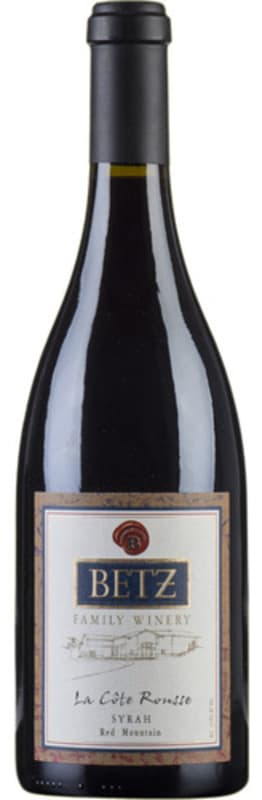


Winemaker Notes
Professional Ratings
-
Jeb Dunnuck
The 2016 Syrah La Cote Rousse is built around clone 99, all from Red Mountain, that saw 45% whole clusters in the fermentation. This cuvee, which is also moving more and more toward Ciel du Cheval, is 88% from this terrific site. It’s another inky purple colored red with a beautiful bouquet of black raspberries, toasted spice, dried herbs, and mineral aromas and flavors. Still tight, backward and reserved, yet with beautiful potential, this full-bodied, ripe, layered Syrah needs 2-3 years of bottle age and will keep for 15+ years.
Rating: 95+ -
James Suckling
Some much spice and mineral aromas here with hints of cloves and white pepper. Full body, ink and dark fruit and some black olives. A solid and chewy syrah with so much strength yet form. Give it two or three years after release.
-
Robert Parker's Wine Advocate
The 2016 Syrah La Côte Rousse reveals notes of purple flowers, crunchy dark berry fruit and cracked pepper, followed by a medium-bodied, youthfully chewy but fine-grained palate that's bright and chalky. Taut and concentrated, it will require—and reward—some patience.
Rating: 94+ -
Wine Spectator
Tightly wound and trim, with blueberry, stony mineral and spice flavors that finish with a slight tannic grip. Best from 2021 through 2024.


Marked by an unmistakable deep purple hue and savory aromatics, Syrah makes an intense, powerful and often age-worthy red. Native to the Northern Rhône, Syrah achieves its maximum potential in the steep village of Hermitage and plays an important component in the Red Rhône Blends of the south, adding color and structure to Grenache and Mourvèdre. Syrah is the most widely planted grape of Australia and is important in California and Washington. Sommelier Secret—Such a synergy these three create together, the Grenache, Syrah, Mourvedre trio often takes on the shorthand term, “GSM.”

A coveted source of top quality red grapes among premier Washington producers, the Red Mountain AVA is actually the smallest appellation in the state. As its name might suggest, it is actually neither a mountain nor is it composed of red earth. Instead the appellation is an anticline of the Yakima fold belt, a series of geologic folds that define a number of viticultural regions in the surrounding area. It is on the eastern edge of Yakima Valley with slopes facing southwest towards the Yakima River, ideal for the ripening of grapes. The area’s springtime proliferation of cheatgrass, which has a reddish color, actually gives the area the name, "Red" Mountain.
Red Mountain produces some of the most mineral-driven, tannic and age-worthy red wines of Washington and there are a few reasons for this. It is just about the hottest appellation with normal growing season temperatures commonly reaching above 90F. The soil is particularly poor in nutrients and has a high pH, which results in significantly smaller berry sizes compared to varietal norms. The low juice to skin ratio in smaller berries combined with the strong, dry summer winds, leads to higher tannin levels in Red Mountain grapes.
The most common red grape varieties here are Cabernet Sauvignon, Merlot, Cabernet Franc and Syrah, among others. Limited white varieties are grown, namely Sauvignon blanc.
The reds of the area tend to express dark black and blue fruit, deep concentration, complex textures, high levels of tannins and as previously noted, have good aging capabilities.