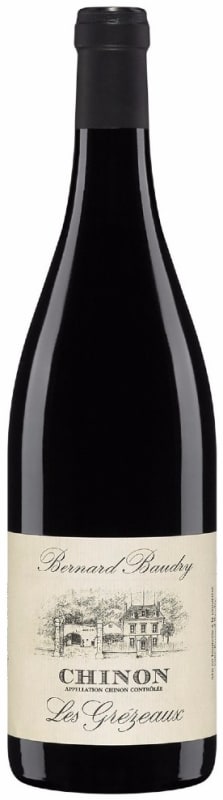


Winemaker Notes
This cuvée features old Cabernet Franc vines in the lieu-dit Les Grézeaux, a gravelly parcel over clay-silica subsoil. It consistently shows concentration and dense structure, all while remaining smooth and accessible. Les Grézeaux also has delightful earthy nuances like herbal and peppery notes, which tend to gain prominence with age, as additional complexities emerge over five, ten, or fifteen years in bottle. A textbook Chinon like this merits simple, rustic cuisine such as roast game, baked potatoes, and sautéed porcini mushrooms.
Professional Ratings
-
Robert Parker's Wine Advocate
Baudry's 2018 Chinon Les Grézeaux is deep, pure, fresh and dark on the nose, with wild and spicy black cherry aromas and lovely concentration and mineral freshness. A classic! Silky, fresh and firm on the palate this is a full-bodied, concentrated and elegant Cabernet Franc with remarkable finesse and sustainable, terroir-driven freshness. The finish is intense and powerful and has this lovely silky, elegant fruit that makes it a top gastronomic wine without being chichi. Tasted in June 2021.


Cabernet Franc, a proud parent of Cabernet Sauvignon, is the subtler and more delicate of the Cabernets. Today Cabernet Franc produces outstanding single varietal wines across the wine-producing world. Somm Secret—One of California's best-kept secrets is the Happy Canyon appellation of Santa Barbara. Here Cabernet Franc shines as a single varietal wine or in blends, expressing sumptuous fruit, savory aromas and polished tannins.

An important red wine appellation in the Touraine district of the Loire, Chinon produces fanciful, light-bodied reds from the Cabernet Franc grape. Chinon also makes charming rosés from the same grape as well as white wines from Chenin blanc. But the reds give the area its fame. Often scented with fresh herbs, black tea and violets, Chinon reds show a lovely combination of fruit and acidity. However, styles have become more concentrated and ripe in recent years from improvements in vineyard management. Modern methods include planting grass between vineyard rows, using higher trellises and deleafing to increase sunlight to berries and therefore improve ripening. Even still, red Chinon is intended to be a light to medium bodied, refreshing wine to be enjoyed in its youth.
Fuller-bodied Chinons come from vineyard sites on the clay and tuffeau limestone slopes, usually from the southern exposed slopes of Cravant-les-Coteaux, and the plateau above Beaumont. Lighter styled wines come from the sand and gravel vineyards near the Loire or Vienne Rivers with the most refined examples coming from the area around Panzoult