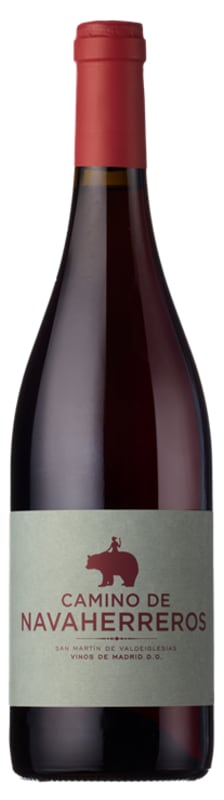


Winemaker Notes
Camino de Navaherreros Tinto is a wine made from Grenache grapes from every vineyard in the estate. Through different soils, orientations and microclimates, it expresses San Martin de Valdeiglesias' terroir.
Professional Ratings
-
Vinous
The 2023 Camino de Navaherreros is a Garnacha with 10% Tempranillo from Gredos, a subzone of San Martín de Valdeiglesias, DO Madrid. Aged for six months in used large barrels or foudres , this is a low-intervention red with sanguine notes, herbs and intense pomegranate over a background of dried rose petals. The palate is light-bodied and cleansing with a tannic texture on the gums, while whole-bunch grip imparts nerve and juiciness. Stems shape the 2023's build, and fruit defines its flavor. A finely tuned infusion-style Garnacha from Gredos.
-
Robert Parker's Wine Advocate
The young red 2023 Camino de Navaherreros is Garnacha with some 10% Tempranillo that fermented with indigenous yeasts and matured in 500-liter barrels and tinaja. It has a slightly deeper color than the pure Garnacha bottlings and a fruit-driven nose with aromas of berries, flowers and herbs. It has a medium-bodied palate with fine tannins and is balanced, very pleasant. It has a moderate 13% alcohol, denoting contained ripeness, and a pH of 3.34 that indicates freshness. Rating: 91+


Grenache thrives in any warm, Mediterranean climate where ample sunlight allows its clusters to achieve full phenolic ripeness. While Grenache's birthplace is Spain (there called Garnacha), today it is more recognized as the key player in the red blends of the Southern Rhône, namely Châteauneuf-du-Pape, Côtes du Rhône and its villages. Somm Secret—The Italian island of Sardinia produces bold, rustic, single varietal Grenache (there called Cannonau). California, Washington and Australia have achieved found success with Grenache, both flying solo and in blends.

Sitting just north of La Mancha, Spain’s (and Europe’s, for that matter) largest classified wine region, this region is much smaller than the vast La Mancha. However, Vinos de Madrid DO is a relatively large region in and of itself, with four subregions that start about 9 miles from the city center. Three of the subregions form a semicircle around the southern suburbs, Arganda, Navalcarnero and San Martín, where styles vary from one to another. El Molar, situated directly north of the city, is the newly created 4th subregion.
Since Vinos de Madrid was granted DO status in 1990, it has immersed itself in local wine production. Since then, substantial efforts have been made to raise quality and knowledge of the wines produced here. Millions of tourists who visit Spain’s capital city each year help the wines gain recognition and popularity across the globe. The growing investment through the years has paid off and export markets are increasingly interested in Vinos de Madrid wines.
While Tempranillo is the most planted grape variety in the Arganda subregion in the southeast, Garnacha is the dominant grape in all other subregions, including El Molar in the north, Navalcarnero in the south, and especially San Martín de Valdeiglesias in the west.