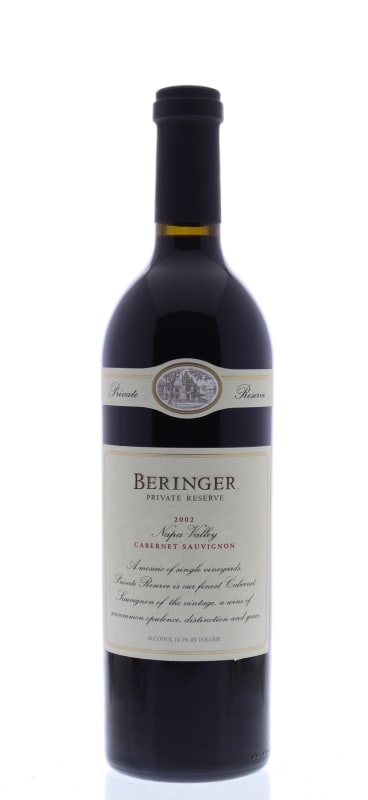


Winemaker Notes
Professional Ratings
-
Robert Parker's Wine Advocate
Put them all together and you have the 2002 Cabernet Sauvignon Private Reserve, a sensational 14,000-case cuvee that is one of the benchmarks for what Napa Valley is capable of achieving. Its dense purple color is followed by copious notes of smoky barbecue, creme de cassis, white chocolate, blackberries, charcoal and truffles. Full-bodied, fleshy and succulent, with sweet tannins in the finish, this 2002 has not yet hit full maturity. Give it another 2-4 years of cellaring, and drink it over the following two decades. I asked the winemaking team what the final blend was for the 2002 Private Reserve, and to the best of their recollection, the largest component was from Steinhauer Ranch (50%), followed by St. Helena Home Ranch (23%) and tiny percentages of Bancroft, Rancho del Oso, Chabot, Marston, and some Cabernet Franc from Howell Mountain.
-
Connoisseurs' Guide
Here is a big, beautifully ripened, definitively varietal opus that is brimming with deep, well-extracted fruit and decked out with a full measure of very sweet oak. Its precise focus and its wholly impeccable balance place it at the forefront of the pack, and it never once hints at heaviness or heat. While fairly tannic, it is not in the least tough, and its essential juiciness perseveres to the end. Those with a taste for young Cabernet will find lots to like even now, but the real beauty of this compelling wine will only emerge with five years of time.
-
Wine & Spirits
Ed Sbragia blends this wine from a selection of vineyards primarily on Howell Mountain and closer to the winery in St. Helena. On their own, these vineyards produce distinctive and ageworthy cabernets; Sbragia's selections of Chabot, Marston and Bancroft are among the top wines in the valley. The Private Reserve often blends away some of those distinctions, emphasizing winemaking style instead. To me, it often tastes like a well-heeled wine, glossy and easy to appreciate. This vintage goes beyond those straightforward charms. It starts off warm and fat, with spicy red berry flavors and a touch of bitterness in the tannin, then air begins to meld the fruit and structure, bringing complexity and a meaty richness.
-
Wine Enthusiast
Huge wine, young and tannic, almost bitter now and not offering much relief. But of course you don’t buy Beringer PR tonight. There is indeed enormous Cabernet flavor deep down inside, offering oodles of blackberries and cherries and charry new oak, but there’s also a warning note of prune.



As California's longest continuously operating winery, Beringer has been defining Napa Valley winemaking since it was founded by Jacob and Frederick Beringer in 1876. By continuing that pioneering spirit, Beringer established many 'firsts' as leaders in the wine industry. They were one of the first gravity fed facilities and among the first to operate using hand dug caves and cellars. Beringer were the first to give public tours in 1934, starting a Napa Valley hospitality tradition. They are the first and only winery to have both a red and a white wine named #1 Wine of the Year by Wine Spectator Magazine. Today, they proudly celebrate and remain true to their pioneering legacy.

One of the most prestigious wines of the world capable of great power and grace, Napa Valley Cabernet is a leading force in the world of fine, famous, collectible red wine. Today the Napa Valley and Cabernet Sauvignon are so intrinsically linked that it is difficult to discuss one without the other. But it wasn’t until the 1970s that this marriage came to light; sudden international recognition rained upon Napa with the victory of the Stag’s Leap Wine Cellars 1973 Cabernet Sauvignon in the 1976 Judgement of Paris.
Cabernet Sauvignon undoubtedly dominates Napa Valley today, covering half of the land under vine, commanding the highest prices per ton and earning the most critical acclaim. Cabernet Sauvignon’s structure, acidity, capacity to thrive in multiple environs and ability to express nuances of vintage make it perfect for Napa Valley where incredible soil and geographical diversity are found and the climate is perfect for grape growing. Within the Napa Valley lie many smaller sub-AVAs that express specific characteristics based on situation, slope and soil—as a perfect example, Rutherford’s famous dust or Stags Leap District's tart cherry flavors.