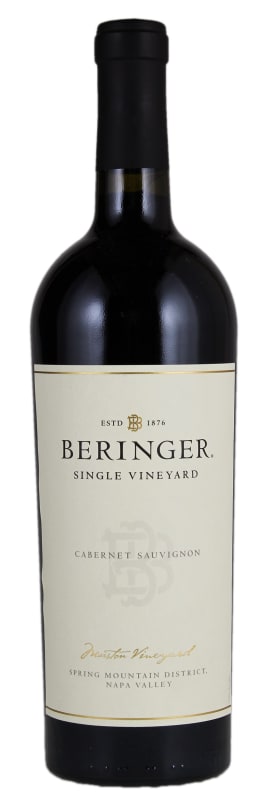


Winemaker Notes
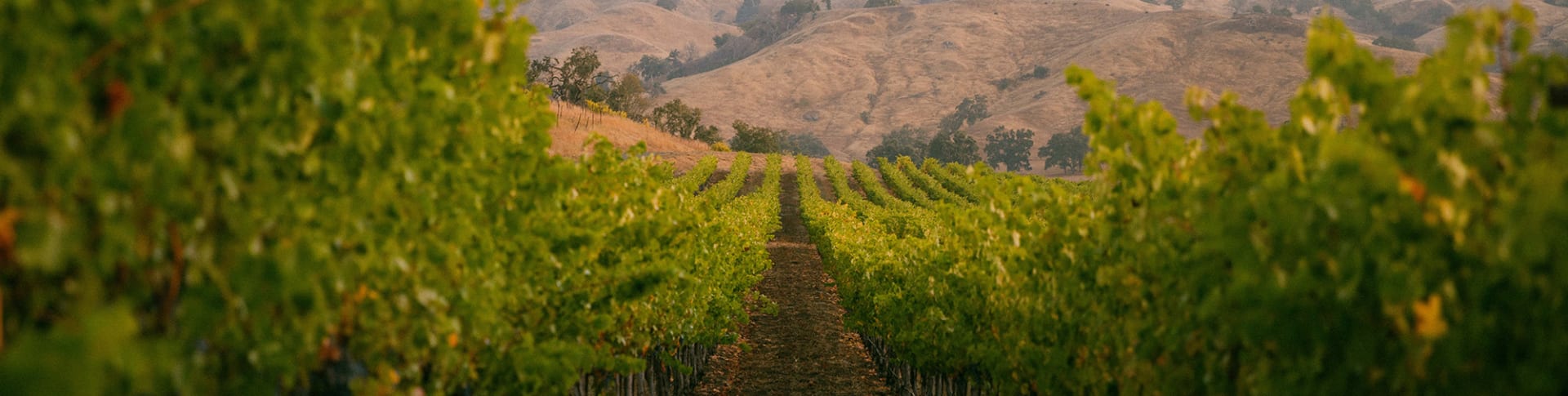
Marston Vineyard perches on the slopes of Spring Mountain to the west of St. Helena, just a few miles uphill from the site of the Beringer brothers’ original St. Helena Home vineyard. The restrictive soil, mostly stony loam, produces grapes with highly developed fruit flavors. Within the vineyard, the terrain rises to approximately 1200 feet, varying between steep, terraced slopes to gently rolling land. Careful attention is paid to vineyard blocks, which are kept separate and vinified with a goal of extracting maximum flavor.


As California's longest continuously operating winery, Beringer has been defining Napa Valley winemaking since it was founded by Jacob and Frederick Beringer in 1876. By continuing that pioneering spirit, Beringer established many 'firsts' as leaders in the wine industry. They were one of the first gravity fed facilities and among the first to operate using hand dug caves and cellars. Beringer were the first to give public tours in 1934, starting a Napa Valley hospitality tradition. They are the first and only winery to have both a red and a white wine named #1 Wine of the Year by Wine Spectator Magazine. Today, they proudly celebrate and remain true to their pioneering legacy.

A noble variety bestowed with both power and concentration, Cabernet Sauvignon enjoys success all over the globe, its best examples showing potential to age beautifully for decades. Cabernet Sauvignon flourishes in Bordeaux's Medoc where it is often blended with Merlot and smaller amounts of some combination of Cabernet Franc, Malbecand Petit Verdot. In the Napa Valley, ‘Cab’ is responsible for some of the world’s most prestigious, age-worthy and sought-after “cult” wines. Somm Secret—DNA profiling in 1997 revealed that Cabernet Sauvignon was born from a spontaneous crossing of Cabernet Franc and Sauvignon Blanc in 17th century southwest France.

Above the town of St. Helena on the eastern slopes of the Mayacamas Mountains sits the Spring Mountain District.
A dynamic region, its vineyards, cut by numerous springs and streams, vary in elevation, slope and aspect. Soils differ throughout with over 20 distinct types inside of the 8,600 acres that define the appellation. Within that area, only about 1,000 are planted to vineyards. Predominantly farmed by small, independent producers, the region currently has just over 30 wineries.
During the growing season, late afternoon Pacific Ocean breezes reach the Spring Mountain vineyards, which sit at between 400 and 1,200 feet. Daytime temperatures during mid summer and early fall remain slightly cooler than those of the valley floor.
Spring Mountain soils—volcanic matter and sedimentary rock—create intense but balanced reds with lush and delicate tannins. The area excels with Bordeaux varieties such as Cabernet Sauvignon, Cabernet Franc and Merlot and in some cooler spots, Chardonnay.