

Winemaker Notes
Professional Ratings
-
Robert Parker's Wine Advocate
The black/purple-colored 1997 Petite Sirah Haynes Vineyard is a monster. It boasts knock-out aromas of licorice, blackberries, cassis, and smoky oak. This dense, full-bodied, mouth-staining wine should be cellared for 5 years, and will last for two decades. It will be a compelling offering when fully mature.



As California's longest continuously operating winery, Beringer has been defining Napa Valley winemaking since it was founded by Jacob and Frederick Beringer in 1876. By continuing that pioneering spirit, Beringer established many 'firsts' as leaders in the wine industry. They were one of the first gravity fed facilities and among the first to operate using hand dug caves and cellars. Beringer were the first to give public tours in 1934, starting a Napa Valley hospitality tradition. They are the first and only winery to have both a red and a white wine named #1 Wine of the Year by Wine Spectator Magazine. Today, they proudly celebrate and remain true to their pioneering legacy.

With its deep color, firm tannins and bold flavors, there is nothing petite about Petite Sirah. The variety, originally known as Durif in the Rhône, took on its more popular moniker after being imported to California in the early 1880s. Quintessentially recognized today as a grape of the Golden State, Petite Sirah works well blended with Zinfandel and finds success as a single varietal wine in the state’s warmer districts. Somm Secret—Petite Sirah is not a smaller version of Syrah but it is an offspring of Syrah and the now nearly extinct French Alpine variety called Peloursin.

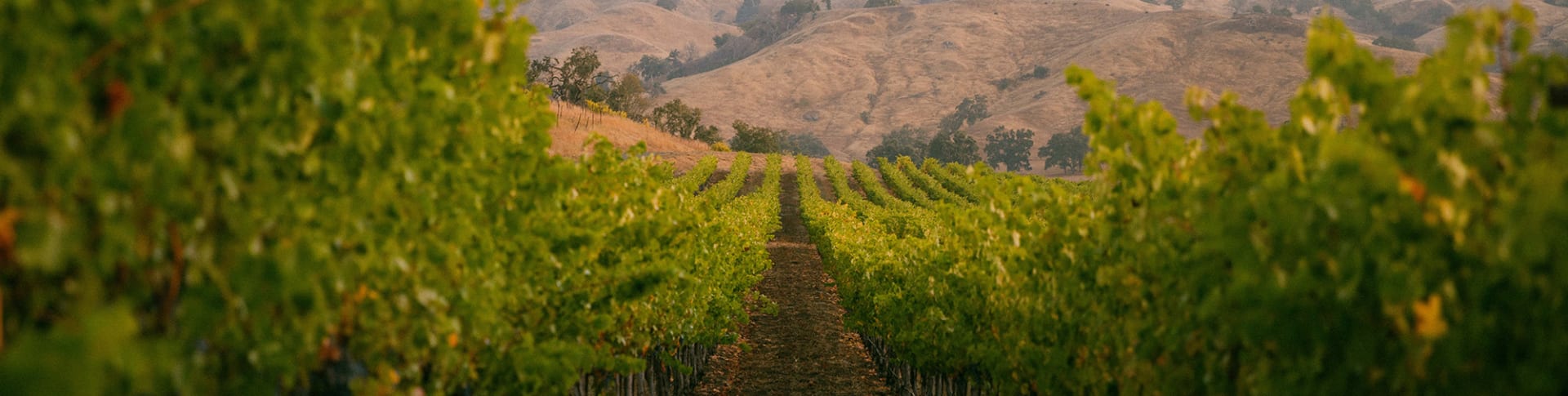
St. Helena is in the heart of the Napa Valley, nestled between Calistoga to the north and Rutherford on its southern border. On its western side, the Mayacamas Mountains guard it from the cooling effects of the Pacific Ocean; to its east stand the Vaca Mountains. In conjunction, these mountain ranges serve to lock in summer daytime heat. But in the evening, cool air from the San Pablo Bay funnels up through the valley, creating very chilly nights. It isn’t uncommon for temperatures to drop 50 degrees, a shift that promotes a balance of sugar ripeness and acidity in wine grapes.
St. Helena contains a plethora of different soil types in a small area, which have been enhanced over centuries by rain runoff from both mountain ranges. Its vineyards cover a variety of terrain, spreading across the bucolic valley floor and its benchlands.
These ideal topographic and climatic growing conditions easily caught the attention of early winemaking pioneers. In fact, St. Helena is the birthplace of Napa Valley’s commercial wine industry. Dr. Crane founded his cellar in 1859, David Fulton in 1860 and Charles Krug in 1861.
Today there are no less than 400 separate vineyards planted within the 12,000 acres that make up the St. Helena appellation.
Revered most for its red wines based on Bordeaux varieties, namely Cabernet Sauvignon, the St. Helena appellation is also a source of superior Syrah, Zinfandel and Sauvignon blanc.