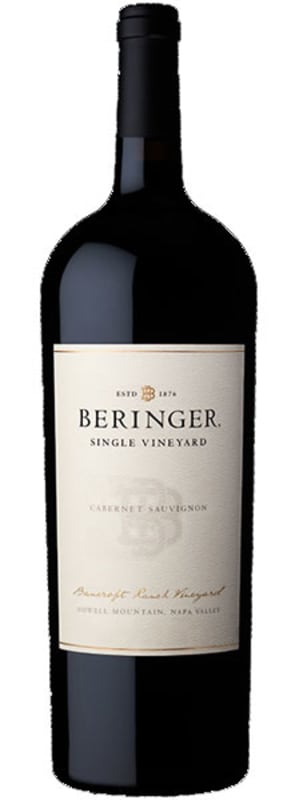


Winemaker Notes
Professional Ratings
-
Robert Parker's Wine Advocate
One of Napa’s finest Merlots is the 2013 Merlot Bancroft Ranch from Howell Mountain. The blend of 82% Merlot, 12% Cabernet Sauvignon and 6% Cabernet Franc tips the scales at a lofty 15.2% alcohol. The wine was aged in nearly 50% new French oak for 16 to 18 months. A blockbuster Merlot with a dense purple color, a big sweet kiss of mocha, coffee bean, black cherry and blackcurrant fruit, it is rich and opulent, with a sumptuous texture, terrific purity, and moderately high tannins. Drink this big, savory, exuberant and mouthfilling Merlot over the next 12-15 years.
-
Wine Spectator
Plush and ripe, with a complex core, offering aromas of blackberry and dusty dried herb to the dark plum, cedar and mineral flavors. Drink now through 2028.



As California's longest continuously operating winery, Beringer has been defining Napa Valley winemaking since it was founded by Jacob and Frederick Beringer in 1876. By continuing that pioneering spirit, Beringer established many 'firsts' as leaders in the wine industry. They were one of the first gravity fed facilities and among the first to operate using hand dug caves and cellars. Beringer were the first to give public tours in 1934, starting a Napa Valley hospitality tradition. They are the first and only winery to have both a red and a white wine named #1 Wine of the Year by Wine Spectator Magazine. Today, they proudly celebrate and remain true to their pioneering legacy.

One of the most prestigious wines of the world capable of great power and grace, Napa Valley Cabernet is a leading force in the world of fine, famous, collectible red wine. Today the Napa Valley and Cabernet Sauvignon are so intrinsically linked that it is difficult to discuss one without the other. But it wasn’t until the 1970s that this marriage came to light; sudden international recognition rained upon Napa with the victory of the Stag’s Leap Wine Cellars 1973 Cabernet Sauvignon in the 1976 Judgement of Paris.
Cabernet Sauvignon undoubtedly dominates Napa Valley today, covering half of the land under vine, commanding the highest prices per ton and earning the most critical acclaim. Cabernet Sauvignon’s structure, acidity, capacity to thrive in multiple environs and ability to express nuances of vintage make it perfect for Napa Valley where incredible soil and geographical diversity are found and the climate is perfect for grape growing. Within the Napa Valley lie many smaller sub-AVAs that express specific characteristics based on situation, slope and soil—as a perfect example, Rutherford’s famous dust or Stags Leap District's tart cherry flavors.