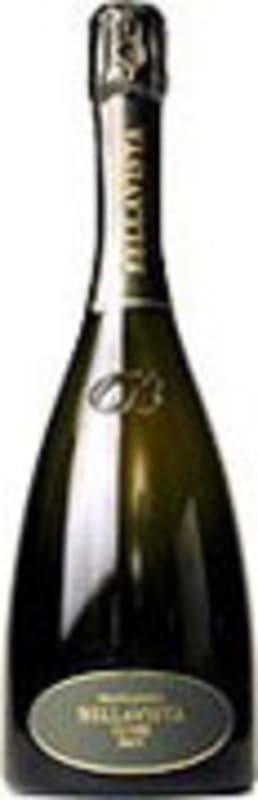

Winemaker Notes
Professional Ratings
-
Robert Parker's Wine Advocate
The NV Brut Cuvee is simply beautiful. White peaches, jasmine, minerals, ash and grapefruit are some of the aromas and flavors that come together in this taut, focused Franciacorta. This is a superb example of Italy’s best reasonably priced methode Champenoise wine. I loved it. Anticipated maturity: 2012-2016.
-
Wine Enthusiast
Bellavista's Cuvée Brut is a wine that delivers consistent and delicious results year after year. It's a sure bet because of its delicately toasted notes that are enhanced by plenty of ripe fruit and citrus. It also shows extreme finesse and elegance, with a bright and cheerful personality.



This remarkable operation, masterminded by owner Vittorio Moretti and winemaker Mattia Vezzola (Gambero Rosso Winemaker of the Year 2008), combines grandeur and star quality with familiarity and simplicity. The estate’s larger-than-life facilities, 3,280 feet of underground cellars, impressive contemporary architecture (helipad included), and 1,250 surrounding acres of Franciacorta soil – 462 acres of which are now under vine – leave you awestruck. Moretti founded the estate in 1977, and the first bottle of Franciacorta was released in 1979. The winery philosophy: "Every objective we reach is merely the starting point for a higher objective." In over a quarter of a century, the style of Bellavista has become a benchmark to the DOCG. Its vineyards now constitute 8% of the entire appellation, in extraordinarily favorable positions. Franciacorta’s limestone/clayey soil, richly endowed with the same elements as Champagne, is enhanced by such quality details as in-depth genetic research, organic-only fertilization, phased out harvests, parcelled out crops (over eighty selections, separately fermented in oak/stainless steel), Marmonnier and Coquard presses, up to six years’ bottle age in the cellars, refermentation directly in the bottle for the larger format sparkling wines, remuage by hand for all sparkling wines, etc... Both still and sparkling wines are from prime hillside vineyards, clonally selected material and densely planted stock. The past couple of years have seen yet another phase in the estate’s constant crescendo: increasing élevage, on average from 36 to 48 months, so as to achieve the greatest possible quality consistency and personality.

A term typically reserved for Champagne and Sparkling Wines, non-vintage or simply “NV” on a label indicates a blend of finished wines from different vintages (years of harvest). To make non-vintage Champagne, typically the current year’s harvest (in other words, the current vintage) forms the base of the blend. Finished wines from previous years, called “vins de reserve” are blended in at approximately 10-50% of the total volume in order to achieve the flavor, complexity, body and acidity for the desired house style. A tiny proportion of Champagnes are made from a single vintage.
There are also some very large production still wines that may not claim one particular vintage. This would be at the discretion of the winemaker’s goals for character of the final wine.

Thanks to the renewal of the collaboration between the Italian Trade Agency (ITA) and Wine.com, 50 new wineries and distilleries have been selected as new suppliers to the Wine.com platform. Click here to learn more about this program.
Italian Wine
Named “Oenotria” by the ancient Greeks for its abundance of grapevines, Italy has always had a culture virtually inextricable from red, white and sparkling wines. Wine grapes grow in every region throughout Italy—a long and narrow boot-shaped peninsula extending into the Mediterranean.
Italian Wine Regions
Naturally, most Italian wine regions enjoy a Mediterranean climate and a notable coastline, if not coastline on all borders, as is the case with the islands of Sicily and Sardinia. The Alps in the northern Italian wine regions of Valle d'Aosta, Lombardy and Alto Adige create favorable conditions for cool-climate grape varieties. The Apennine Mountains, extending from Liguria in the north to Calabria in the south, affect climate, grape variety and harvest periods throughout. Considering the variable terrain and conditions, it is still safe to say that most high quality viticulture in Italy takes place on picturesque hillsides.
Italian Grape Varieties
Italy boasts more indigenous grape varieties than any other country—between 500 and 800, depending on whom you ask—and most Italian wine production relies upon these native grapes. In some Italian wine regions, international varieties have worked their way in, but are declining in popularity, especially as younger growers take interest in reviving local varieties. Most important are Sangiovese, reaching its greatest potential in Tuscany, as well as Nebbiolo, the prized grape of Piedmont, producing single varietal, age-worthy Piedmontese wines. Other important varieties include Corvina, Montepulciano, Barbera, Nero d’Avola and of course the white wines, Trebbiano, Verdicchio and Garganega. The list goes on.