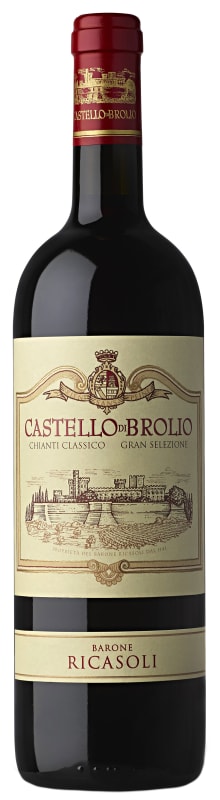


Winemaker Notes
Castello di Brolio is Barone Ricasoli's flagship wine created from a meticulous selection of estate-grown grapes. Produced only in the best years, this is an iconic wine which will leave a lasting impression. Its most salient features are the concentration and tannic structure. This prized blend, carefully aged in the cellars at Brolio Castle, warms hearts and souls and offers extraordinary taste which elegance and freshness stands even the test of many years of ageing.
Professional Ratings
-
James Suckling
This is very spicy with nutmeg, cloves and hints of hazelnuts that add complexity to the black-cherry and raspberry undertones. Full-bodied, rich and layered with a velvety texture and a flavorful finish. Beautiful center palate. Very powerful and structured. Hints of mushroom and balsamic in the aftertaste. Needs time to soften. Try after 2024.
-
Decanter
2018 was a healthy vintage following a warm, dry summer. This Gran Selezione is youthful but already drinking well, its sweet core of ripe red and black cherries framed by integrated tannins and smooth acidity. Licks of spice, vanilla pod, wood, violets, herbs and tar lend complexity and potential for further improvement.
-
Wine Spectator
Vibrant black cherry and black currant flavors are the major themes in this red, shaded by earth, eucalyptus and resinous oak notes. A bit gruff on the finish now, but should come around nicely. Best from 2023 through 2032.
-
Wine Enthusiast
Iris, camphor and cedar aromas emerge from the glass. The medium bodied palate offers black plum, espresso and vanilla alongside polished tannins. It’s already accessible but also offers good midterm aging potential.


Among Italy's elite red grape varieties, Sangiovese has the perfect intersection of bright red fruit and savory earthiness and is responsible for the best red wines of Tuscany. While it is best known as the chief component of Chianti, it is also the main grape in Vino Nobile di Montepulciano and reaches the height of its power and intensity in the complex, long-lived Brunello di Montalcino. Somm Secret—Sangiovese doubles under the alias, Nielluccio, on the French island of Corsica where it produces distinctly floral and refreshing reds and rosés.

One of the first wine regions anywhere to be officially recognized and delimited, Chianti Classico is today what was originally defined simply as Chianti. Already identified by the early 18th century as a superior zone, the official name of Chianti was proclaimed upon the area surrounding the townships of Castellina, Radda and Gaiole, just north of Siena, by Cosimo III, Grand Duke of Tuscany in an official decree in 1716.
However, by the 1930s the Italian government had appended this historic zone with additonal land in order to capitalize on the Chianti name. It wasn’t until 1996 that Chianti Classico became autonomous once again when the government granted a separate DOCG (Denominazione di Origine Controllata e Garantita) to its borders. Ever since, Chianti Classico considers itself no longer a subzone of Chianti.
Many Classicos are today made of 100% Sangiovese but can include up to 20% of other approved varieties grown within the Classico borders. The best Classicos will have a bright acidity, supple tannins and be full-bodied with plenty of ripe fruit (plums, black cherry, blackberry). Also common among the best Classicos are expressive notes of cedar, dried herbs, fennel, balsamic or tobacco.