
Winemaker Notes
Pair with classic German/French cuisine; cassoulet and choucroute garnie.
Professional Ratings
-
Wilfred Wong of Wine.com
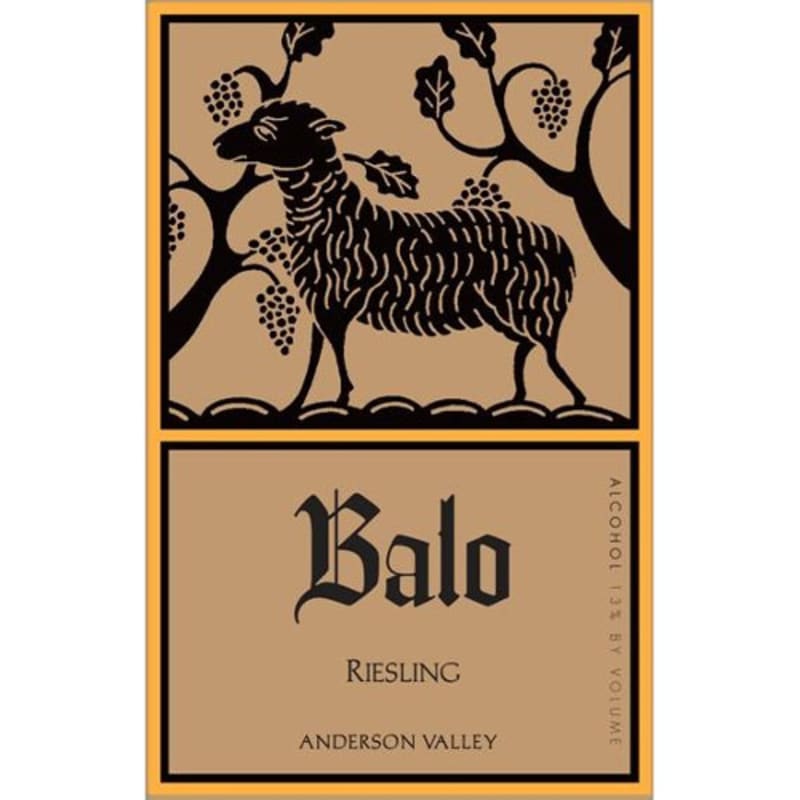
The excellent 2014 Balo Anderson Valley Riesling makes me want to dive into a bowl of fresh cracked crab. This wine's ripe apple, a touch of petrol, and chalk earth makes a pairing with shellfish mandatory. (Tasted: October 2, 2017, San Francisco, CA)


Riesling possesses a remarkable ability to reflect the character of wherever it is grown while still maintaining its identity. A regal variety of incredible purity and precision, this versatile grape can be just as enjoyable dry or sweet, young or old, still or sparkling and can age longer than nearly any other white variety. Somm Secret—Given how difficult it is to discern the level of sweetness in a Riesling from the label, here are some clues to find the dry ones. First, look for the world “trocken.” (“Halbtrocken” or “feinherb” mean off-dry.) Also a higher abv usually indicates a drier Riesling.

Surrounded by redwood forests and often blanketed in chilly, ocean fog, the Anderson Valley is one of California’s most picturesque appellations. During the growing season, moist, cool, late afternoon air flows in from the Pacific Ocean along the Navarro River and over the valley's golden, oak-studded hills. High and low temperatures can vary as much as 40 or 50 degrees within a single day, allowing for slow and gentle ripening of grapes, which will in turn create elegantly balanced wines.
The Anderson Valley is best known for Pinot Noir made in a range of styles from delicate and floral to powerful and concentrated. Chardonnay also shines here, and both varieties are often utilized for the production of some of California’s best traditional method sparkling wines. The region also draws inspiration from Alsace and produces excellent Riesling, Gewürztraminer, Pinot Blanc and Pinot Gris.