
Winemaker Notes
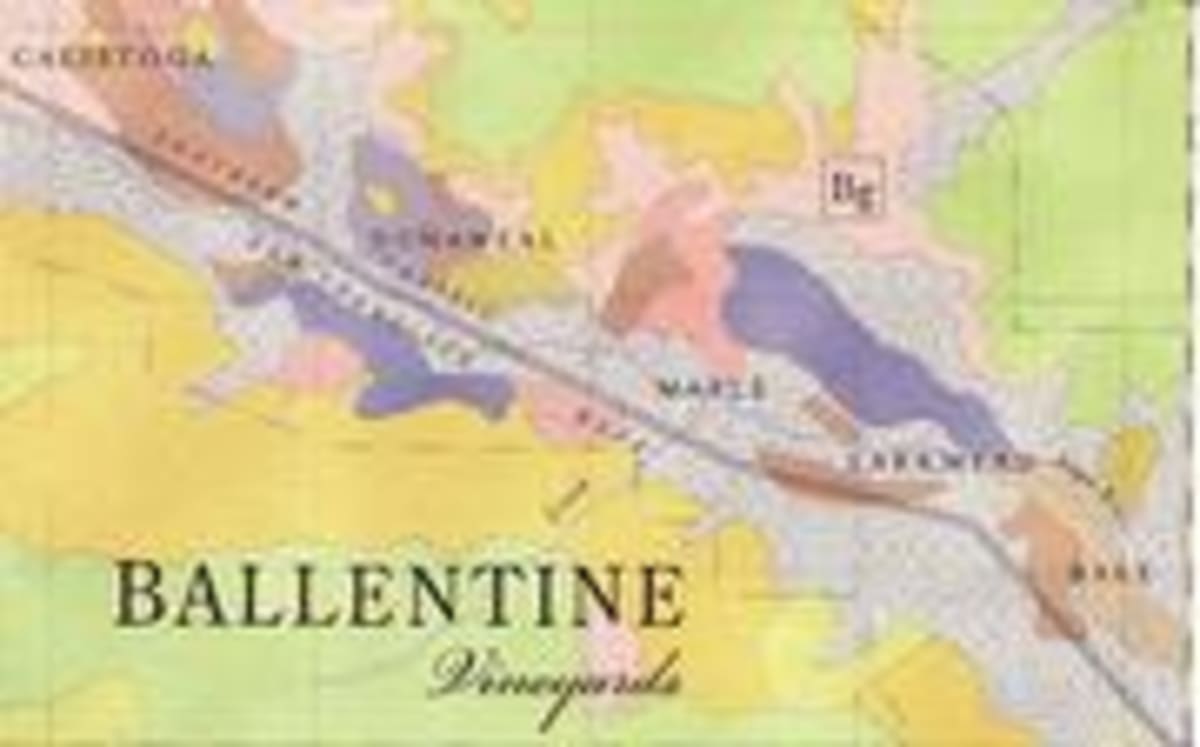
The inspiration for this label was a soil survey map from 1933 depicting the various soil types throughout the Napa Valley. Conducted by the U.S. Department of Agriculture in collaboration with the University of California, each soil type was mapped and given a two letter legend. Our vineyards are planted in a soil referred to as Bale gravelly-loam hence the acronym Bg - the name we chose to designate these limited production reserve wines. Named after the pioneering Bale family, this soil type is characterized by low fertility, and its loose well drained structure. This soil limits the vines yield, producing fruit with excellent concentration and structure. It is considered one of the finest in the Napa Valley for growing high quality wine grapes. Moreover, it has rather limited distribution, occuring primarily on the alluvial fans at the base of ridges that delineate our valley.
"The dark purple-colored, impressively fruity 1999 Zinfandel (map label) exhibits Rhone-like characteristics of earth, Provencal herbs, pepper, spice box, licorice, plum, currants, and cherries, a sweet, full-bodied, fruit-driven personality, outstanding ripeness, and superb purity. Drink it over the next 5-6 years."
-Wine Advocate
Professional Ratings


Undoubtedly proving its merit over and over, Napa Valley is a now a leading force in the world of prestigious red wine regions. Though Cabernet Sauvignon dominates Napa Valley, other red varieties certainly thrive here. Important but often overlooked include Merlot and other Bordeaux varieties well-regarded on their own as well as for their blending capacities. Very old vine Zinfandel represents an important historical stronghold for the region and Pinot noir is produced in the cooler southern parts, close to the San Pablo Bay.
Perfectly situated running north to south, the valley acts as a corridor, pulling cool, moist air up from the San Pablo Bay in the evenings during the hot days of the growing season, which leads to even and slow grape ripening. Furthermore the valley claims over 100 soil variations including layers of volcanic, gravel, sand and silt—a combination excellent for world-class red wine production.