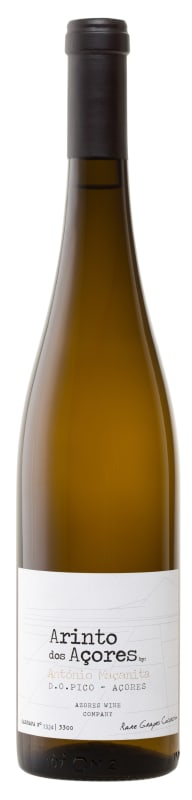


Winemaker Notes
Brilliant green-yellow. Explosive aromas of lime zest, lemon, green mango and sea spray on the nose. A weighty, concentrated palate with intense citrus and green tropical fruits overlaid with assertive, saline-inflected minerality. Incisive, laser-focused acidity runs through the mid palate, kept in balance by impressive mouth-filling richness. This is a structured, intense wine with capacity to age.
Fresh, very mineral and salty. The perfect partner for oysters and "cracas." Works well with grilled fish, salads and fresh seafood.
Professional Ratings
-
Robert Parker's Wine Advocate
The 2019 Arinto dos Açores Sur Lies is mostly unoaked (20% of the juice was in neutral wood), bone dry (half a gram of residual sugar) and comes in at 12.4% alcohol. As much as I like the winery's "regular" Arinto, I usually find this to be a small step up. This year they are pretty close. More importantly, the style is rather different. It depends ultimately on what you like—and that's why you read the tasting notes, not just look at the scores. This is rounder and more caressing in texture but less zippy. The concentration is better and it soaks up the acidity a bit more, creating a rather different balance. While this more easily counters the acidity and seems less penetrating as a result, don't be confused—it has plenty of acidity. It's just a matter of perception and incremental change. Overall, this looks poised to age well. It will be interesting to see how it develops.


A white Portugese variety documented mainly along coastal vineyards surrounding Bucelas and Lisbon, Arinto shows marked citrus qualities with more stone fruit as it ages. Somm Secret—When a blending ingredient in Vinho Verde, it is called Pedernã.

Best known for intense, impressive and age-worthy fortified wines, Portugal relies almost exclusively on its many indigenous grape varieties. Bordering Spain to its north and east, and the Atlantic Ocean on its west and south coasts, this is a land where tradition reigns supreme, due to its relative geographical and, for much of the 20th century, political isolation. A long and narrow but small country, Portugal claims considerable diversity in climate and wine styles, with milder weather in the north and significantly more rainfall near the coast.
While Port (named after its city of Oporto on the Atlantic Coast at the end of the Douro Valley), made Portugal famous, Portugal is also an excellent source of dry red and white Portuguese wines of various styles.
The Douro Valley produces full-bodied and concentrated dry red Portuguese wines made from the same set of grape varieties used for Port, which include Touriga Nacional, Tinta Roriz (Spain’s Tempranillo), Touriga Franca, Tinta Barroca and Tinto Cão, among a long list of others in minor proportions.
Other dry Portuguese wines include the tart, slightly effervescent Vinho Verde white wine, made in the north, and the bright, elegant reds and whites of the Dão as well as the bold, and fruit-driven reds and whites of the southern, Alentejo.
The nation’s other important fortified wine, Madeira, is produced on the eponymous island off the North African coast.