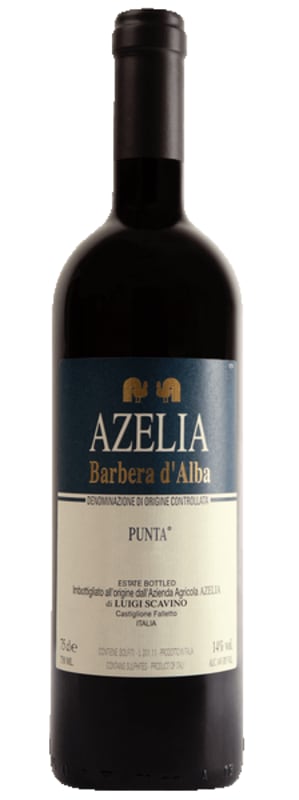


Winemaker Notes
Freshness and liveliness. The age of the vines of the Punta vineyard, over 60 years, characterizes the harmony of this wine. More-than-balanced acidity gives it a strong but gentle character which strikes you at once. Notes of forest berries, prune and blackberry.
Professional Ratings
-
Robert Parker's Wine Advocate
From vintner Luigi Scavino, the Azelia 2016 Barbera d'Alba Punta offers inky dark color saturation with a broad and lasting aromatic profile. The bouquet is made mostly of black fruit aromas, with a few highlights of red cherry or cassis. However, the wine's texture is a weave of essentially plum, blackberry and prune. There is spice, tobacco and leather at the back, but these play background roles. What this wine also has is a tight, linear mouthfeel driven by the grape's natural freshness. Fruit comes from Castiglione Falletto from a vineyard named Punta (or "point" in English) because it is located at the pointy top of a hill.
-
Wine Spectator
The fruit is on the dark side, here—black cherry and blackberry—accented by elements of licorice, earth and iron. Sleek and firm, shows fine balance, delineation and a long finish.


Friendly and approachable, Barbera produces wines in a wide range of styles, from youthful, fresh and fruity to serious, structured and age-worthy. Piedmont is the most famous source of Barbera; those from Asti and Alba garner the most praise. Barbera actually can adapt to many climates and enjoys success in some New World regions. Somm Secret—In the past it wasn’t common or even accepted to age Barbera in oak but today both styles—oaked and unoaked—abound and in fact most Piedmontese producers today produce both styles.

An historic village situated right in between the famous regions of Barolo and Barbaresco, Alba is also the name for the larger wine region surrounding the village.
In a sense, “Alba” is a catch-all phrase, and includes the declassified Nebbiolo wines made in Barolo and Barbaresco, as well as the Nebbiolo grown just outside of these regions’ borders. In fact, Nebbiolo d’Alba is a softer, less tannic and more fruit-forward wine ready to drink within just a couple years of bottling. It is a great place to start if you want to begin to understand the grape. Likewise, the even broader category of Langhe Nebbiolo offers approachable and value-driven options as well.
Barbera, planted alongside Nebbiolo in the surrounding hills, and referred to as Barbera d’Alba, takes on a more powerful and concentrated personality compared to its counterparts in Asti.
Dolcetto is ubiquitous here and, known as Dolcetto d'Alba, can be found casually served alongside antipasti on the tables of Alba’s cafes and wine bars.
Not surprisingly, given its location, Alba is recognized as one of Italy’s premiere culinary destinations and is the home of the fall truffle fair, which attracts visitors from worldwide every year.