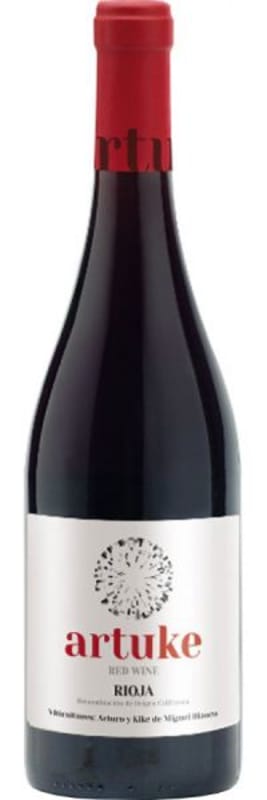


Winemaker Notes
The Grapes for ‘Artuke’ come from several plots in the same village of Baños de Ebro. In this way they can transmit a village character to the wine, characterized by the specific continental climate and its chalky clay soils.
Professional Ratings
-
Robert Parker's Wine Advocate
The approachable and affordable 2019 Artuke is the only 2019 bottled, and it can give us an idea of what's to come: softer wines that are gentle and can be enjoyed early on... This would be a village red from Baños de Ebro (their village) produced with Tempranillo and 5% Viura from terraced vineyards above the Ebro River at 420 to 550 meters in altitude on clay, limestone and sand soils. The full clusters fermented with neutral yeasts, and the wine was kept between three and six months in concrete. This is a textbook example of the category, vintage and grape, with intense aromas of black raspberries and licorice. The palate is soft and round, juicy and with moderate alcohol, very balanced and clean. They harvested it a little earlier, and it might have a little more Viura, which seems to have helped with balance and freshness. This clearly over-delivers for the (incredible) price.


Hailed as the star red variety in Spain’s most celebrated wine region, Tempranillo from Rioja, or simply labeled, “Rioja,” produces elegant wines with complex notes of red and black fruit, crushed rock, leather, toast and tobacco, whose best examples are fully capable of decades of improvement in the cellar.
Rioja wines are typically a blend of fruit from its three sub-regions: Rioja Alta, Rioja Alavesa and Rioja Oriental, although specific sub-region (zonas), village (municipios) and vineyard (viñedo singular) wines can now be labeled. Rioja Alta and Alavesa, at the highest elevations, are considered to be the source of the brightest, most elegant fruit, while grapes from the warmer and drier, Rioja Oriental, produce wines with deep color, great body and richness.