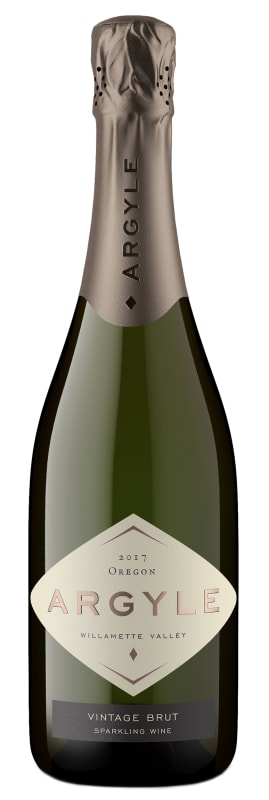


Winemaker Notes
The 2017 sparkling wine vintage in the Willamette Valley was precise, full of beautiful natural acidity and tension in a classically cool September harvest. Knudsen Vineyard, protected in the deep volcanic soils of the Dundee Hills, brings supple depth and elegance, while Spirit Hill Vineyard, in the windy and rocky volcanic soils of the Eola-Amity Hills, brings energy and spicy minerality. Poached apricot, fresh ginger, and roasted almond are framed around a creamy center and long, graceful finish.
Blend: 55% Chardonnay, 30% Pinot Noir, 15% Pinot Meunier
Professional Ratings
-
Robert Parker's Wine Advocate
The 2017 Vintage Brut was aged around 3-4 years on the lees and offers pure scents of sliced apples and pastry, white flowers and stone. The palate is fresh and creamy with pleasingly concentrated fruit and a long, refreshing finish.
-
Tasting Panel
This graceful blend of 55% Chardonnay, 30% Pinot Noir, and 15% Pinot Meunier sourced from the Dundee Hills and Eola–Amity Hills wafts from the glass with the clean snap of linen: Scents of toast, pear, apple, and a hint of green almond presage a stream of racy acidity that carries flavors of lime and stone, tapering to a gentle yet persistent finish.
-
Wine Enthusiast
An exceptional value in a widely available Oregon sparkling wine made by the Champagne method, this blends Pinot Noir (30%) and Chardonnay (55%), with 15% Pinot Meunier. Mixed apple and citrus fruit and underlying minerality all propel this to the top of its price class.
Editors' Choice -
Wine Spectator
Sleek and steely, with elegantly expressive lemon and lime flavors that take on mineral and fresh ginger notes on the way toward a vibrant finish.




Founded in 1987 as Oregon's original sparkling wine house, Argyle quickly stood out as a study in contrasts—honoring the deep traditions of wine and embracing innovation and experimentation; proud to be Oregonian and pulling knowledge from winemakers around the world. When common knowledge said a winery could produce great sparkling wine or great still wine Argyle asked "why not both?", answering the question with acclaimed wines from Pinot Noir, Chardonnay, Pinot Meunier, and Riesling.
Their four estate vineyards make up nearly 500 acres in the Willamette Valley, with the majority in the Eola-Amity Hills and Dundee Hills nested AVAs. Willamette Valley's cool, late ripening climate produces age worthy base wines. The vineyards, nearing 1000' in elevation, ensure fruit develops slowly, retains acidity, and promotes flavor ripeness before sugar ripeness.
Nate Klostermann is the second winemaker in Argyle's 35-year history and has emerged as one of Oregon's most gifted winemakers. He currently celebrates nearly two decades at Argyle and continues to say he "landed in a good spot" when he arrived at Argyle to work his first harvest. With his fine-tuned winemaking skills and passion for Oregon wine, Nate is now recognized for making elegant and complex sparkling wines along with vibrant and impeccably balanced Pinot Noir, Chardonnay, Riesling and Pinot Meunier.
Built on the foundation of "Grower first", Argyle's viticulture team is taking sustainable farming a step further with regenerative farming. Practices such as utilizing custom cover crop and biochar enhanced compost made in house provide natural nutrient additions. Minimal tilling encourages growth of microbes in the soil, water retention and reduces erosion. Blue bird and kestrel habitats are scattered around various vineyards for pest control. Local sheep are brought into the vineyards to manage grass and weeds, and while they aren't a requirement for winemaking, the team has developed bee sanctuaries. These sanctuaries are parcels of fallow land, now dedicated to growing flowers pollinators and beneficial insects.
Their commitment to and partnerships with community organizations, sustainability, Oregon's winegrowing industry, and their employees and families are foundational to Argyle's approach. Argyle makes contributions to non-profit organizations committed to improving the lives of vineyard workers and non-profit organizations that support the arts. These organizations include AHIVOY, ¡Salud!, The Roots Fund, PDX Jazz, Pacific Northwest College of Art, Portland Center Stage, and Portland Opera.
Argyle is the only winery to land on Wine Spectator's Top 100 list for Sparkling, Chardonnay and Pinot Noir.

Representing the topmost expression of a Champagne house, a vintage Champagne is one made from the produce of a single, superior harvest year. Vintage Champagnes account for a mere 5% of total Champagne production and are produced about three times in a decade. Champagne is typically made as a blend of multiple years in order to preserve the house style; these will have non-vintage, or simply, NV on the label. The term, "vintage," as it applies to all wine, simply means a single harvest year.

One of Pinot Noir's most successful New World outposts, the Willamette Valley is the largest and most important AVA in Oregon. With a continental climate moderated by the influence of the Pacific Ocean, it is perfect for cool-climate viticulture and the production of elegant wines.
Mountain ranges bordering three sides of the valley, particularly the Chehalem Mountains, provide the option for higher-elevation vineyard sites.
The valley's three prominent soil types (volcanic, sedimentary and silty, loess) make it unique and create significant differences in wine styles among its vineyards and sub-AVAs. The iron-rich, basalt-based, Jory volcanic soils found commonly in the Dundee Hills are rich in clay and hold water well; the chalky, sedimentary soils of Ribbon Ridge, Yamhill-Carlton and McMinnville encourage complex root systems as vines struggle to search for water and minerals. In the most southern stretch of the Willamette, the Eola-Amity Hills sub-AVA soils are mixed, shallow and well-drained. The Hills' close proximity to the Van Duzer Corridor (which became its own appellation as of 2019) also creates grapes with great concentration and firm acidity, leading to wines that perfectly express both power and grace.
Though Pinot noir enjoys the limelight here, Pinot Gris, Pinot Blanc and Chardonnay also thrive in the Willamette. Increasing curiosity has risen recently in the potential of others like Grüner Veltliner, Chenin Blanc and Gamay.