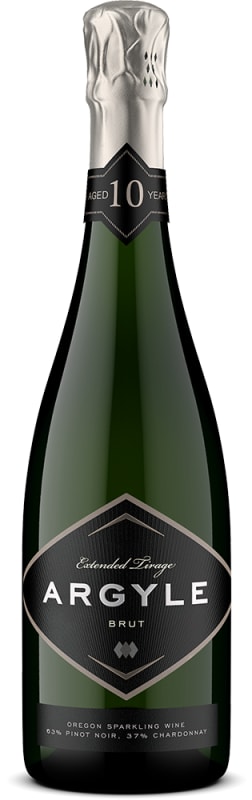


Winemaker Notes
With the sparkling harvest lasting 3 weeks and drawn out into early October, the 2007 Extended Tirage Brut is bursting with crunchy acidity and well developed fruit flavors. Aged upon the lees for 10 years before disgorgement, the wine is impressive for its depth and creamy layers of texture. Grilled peach, fig, honey, and citrus zest are layered with the mature complexity of toast and roasted nuts, bringing harmony to a graceful and elegant finish.
Blend: 63% Chardonnay, 37% Pinot Noir
Professional Ratings
-
Robert Parker's Wine Advocate
A blend of 63% Chardonnay and 37% Pinot Noir, the 2007 Extended Tirage Brut has a nose of Golden Delicious apple, baked yellow pear, baker’s yeast and brioche. Light to medium-bodied and dry in the mouth, it has good expression of fruit and bakery flavors with crisp, refreshing acidity, persistent bubbles and a long, savory finish.
-
Wine Enthusiast
A shift from the 2005, this is one-third Pinot Noir and two-thirds Chardonnay, disgorged in July of 2017. It's tasty and surprisingly young, with tart apple and peach flavors dominant, along with light custard and some lovely toast. This may be enjoyed now or cellared for up to five years.
-
Wine Spectator
Expressive Asian pear and spicy yeast aromas open to richly layered ginger, citrus and blanched almond flavors that linger.


Representing the topmost expression of a Champagne house, a vintage Champagne is one made from the produce of a single, superior harvest year. Vintage Champagnes account for a mere 5% of total Champagne production and are produced about three times in a decade. Champagne is typically made as a blend of multiple years in order to preserve the house style; these will have non-vintage, or simply, NV on the label. The term, "vintage," as it applies to all wine, simply means a single harvest year.

One of Pinot Noir's most successful New World outposts, the Willamette Valley is the largest and most important AVA in Oregon. With a continental climate moderated by the influence of the Pacific Ocean, it is perfect for cool-climate viticulture and the production of elegant wines.
Mountain ranges bordering three sides of the valley, particularly the Chehalem Mountains, provide the option for higher-elevation vineyard sites.
The valley's three prominent soil types (volcanic, sedimentary and silty, loess) make it unique and create significant differences in wine styles among its vineyards and sub-AVAs. The iron-rich, basalt-based, Jory volcanic soils found commonly in the Dundee Hills are rich in clay and hold water well; the chalky, sedimentary soils of Ribbon Ridge, Yamhill-Carlton and McMinnville encourage complex root systems as vines struggle to search for water and minerals. In the most southern stretch of the Willamette, the Eola-Amity Hills sub-AVA soils are mixed, shallow and well-drained. The Hills' close proximity to the Van Duzer Corridor (which became its own appellation as of 2019) also creates grapes with great concentration and firm acidity, leading to wines that perfectly express both power and grace.
Though Pinot noir enjoys the limelight here, Pinot Gris, Pinot Blanc and Chardonnay also thrive in the Willamette. Increasing curiosity has risen recently in the potential of others like Grüner Veltliner, Chenin Blanc and Gamay.