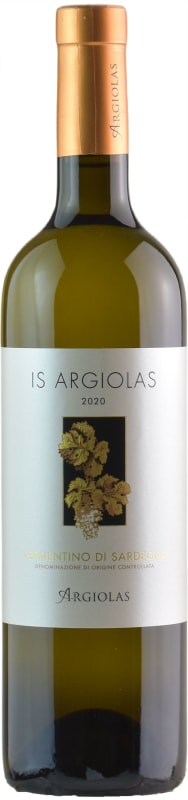


Winemaker Notes
Is Argiolas shows a ripe, almost tropical-fruit profile that reflects longer ripening on the vine. Aromas and flavors of fully ripe apricots and peaches are accented by notes of melon, almond, and honey. Bright acidity provides succulence on the palate to an otherwise richer expression of Vermentino.
The richness of Is Argiolas calls for richer flavors on the table. Antipasti of steamed artichokes or ricotta filled squash blossoms would be ideal pairings. The ample weight and texture of Is Argiolas also makes it an easy match for pasta such as seafood risotto or ravioli stuffed with potato and mint.
Professional Ratings
-
Wine Enthusiast
You'll find aromas of ripe yellow peach, citrus and honeydew in this delicious, fullbodied white. On the rounded, savory palate, tangy acidity lifts lime. Mediterranean herbs and lemon drop candy before an energized saline finish.


A fantastic, aromatic white grape that grows with great success in Sardinia, Tuscany and in lesser proportions on the island of Corsica. Somm Secret—Vermentino is thought to be genetically identical to Liguria’s Pigato grape and Peidmont’s Favorita. It comprises a large proportion of the whites in southern France where it is called Rolle.

Hailed for centuries as a Mediterranean vine-growing paradise, multiple cultures over many centuries have ruled the large island of Sardinia. Set in the middle of the Tyrrhenian Sea, the Phonoecians, Ancient Rome, and subsequently the Byzantines, Arabs and Catalans have all staked a claim on the island at some point in history. Along the way, these inhabitants transported many of their homeland’s prized vines and today Sardinia’s modern-day indigenous grape varieties claim multiple origins. Sardinia’s most important red grapes—namely Cannonau (a synonym for Grenache) and Carignan—are actually of Spanish origin.
Vermentino, a prolific Mediterranean variety, is the island’s star white. Vermentino has a stronghold the Languedoc region of France as well as Italy’s western and coastal regions, namely Liguria (where it is called Pigato), Piedmont (where it is called Favorita) and in Tuscany, where it goes by the name, Vermentino. The best Vermentino, in arguably all of the Mediterranean, grows in Sardinia's northeastern region of Gallura where its vines struggle to dig roots deep down into north-facing slopes of granitic soils. These Vermentino vines produce highly aromatic, full and concentrated whites of unparalleled balance.
Today aside from its dedication to viticulture, Sardinia remains committed to maintaining its natural farmlands, bucolic plains of grazing sheep and perhaps most of all, its sandy, sunny, Mediterranean beaches.