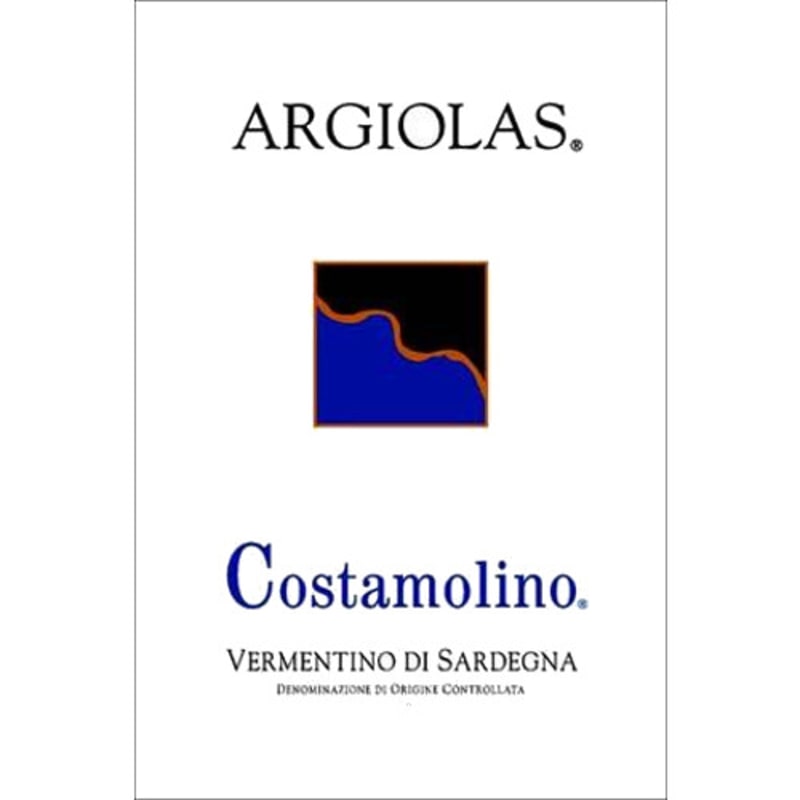

Winemaker Notes
Costamolino is straw yellow in color with green highlights and an intense yet delicate bouquet that displays distinct varietal characteristics. Supple aromas of citrus, pineapple, tropical fruits and honey are wonderfully supported by a zesty acidity.
Delicate and pleasantly refreshing on the palate, Costamolino is the wine of choice for many dishes, from fish antipasti and pastas to vegetables terrine, salads, white meat casseroles, and risotto. Delicious with Asian food and sushi.
Professional Ratings
-
Wine Spectator
Shows lemon rind and honey on the nose, with hints of sliced orange. Full-bodied, with ripe fruit and a long, flavorful finish. Rich, clean and steely. Good value in a squeaky-clean, flavorful white. Drink now. 50,000 cases made.
-
Robert Parker's Wine Advocate
The estate’s 2007 Is Argiolas is made from 100% Vermentino grown on hillside vineyards rich in clay and limestone. It reveals an additional layer of volume, depth and richness compared to the Costamolino, with perhaps a touch less freshness. Still, this is a gorgeous, soft-textured wine that continues to develop nicely in the glass. I would choose the Costamolino to pair with fresh, bright flavors, while the Is Argiolas has the stuffing to stand up to slightly richer foods. Anticipated maturity: 2008-2010.


A fantastic, aromatic white grape that grows with great success in Sardinia, Tuscany and in lesser proportions on the island of Corsica. Somm Secret—Vermentino is thought to be genetically identical to Liguria’s Pigato grape and Peidmont’s Favorita. It comprises a large proportion of the whites in southern France where it is called Rolle.

Hailed for centuries as a Mediterranean vine-growing paradise, multiple cultures over many centuries have ruled the large island of Sardinia. Set in the middle of the Tyrrhenian Sea, the Phonoecians, Ancient Rome, and subsequently the Byzantines, Arabs and Catalans have all staked a claim on the island at some point in history. Along the way, these inhabitants transported many of their homeland’s prized vines and today Sardinia’s modern-day indigenous grape varieties claim multiple origins. Sardinia’s most important red grapes—namely Cannonau (a synonym for Grenache) and Carignan—are actually of Spanish origin.
Vermentino, a prolific Mediterranean variety, is the island’s star white. Vermentino has a stronghold the Languedoc region of France as well as Italy’s western and coastal regions, namely Liguria (where it is called Pigato), Piedmont (where it is called Favorita) and in Tuscany, where it goes by the name, Vermentino. The best Vermentino, in arguably all of the Mediterranean, grows in Sardinia's northeastern region of Gallura where its vines struggle to dig roots deep down into north-facing slopes of granitic soils. These Vermentino vines produce highly aromatic, full and concentrated whites of unparalleled balance.
Today aside from its dedication to viticulture, Sardinia remains committed to maintaining its natural farmlands, bucolic plains of grazing sheep and perhaps most of all, its sandy, sunny, Mediterranean beaches.