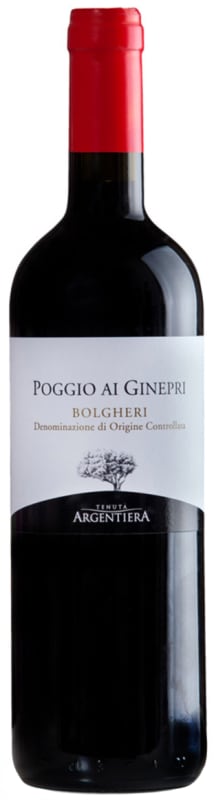


Winemaker Notes
Pair with meat or mushroom-based pasta or rice dishes.
Blend: 40% Cabernet Sauvignon, 30% Merlot, 20% Cabernet Franc, 20% Petit Verdot
Professional Ratings
-
James Suckling
A pretty Bolgheri with notes of cherries, plums, peppercorns and dried herbs. Medium-bodied with firm, fine tannins. Round, balanced and creamy with a fruity edge.
-
Wilfred Wong of Wine.com
COMMENTARY: The 2020 Tenuta Argentiera Poggio al Ginepri is a lovely and appealing wine with an excellent range of nuances. TASTING NOTES: This wine shines with aromas and flavors of black fruit, fragrant flowers, dried leaves, and savory spices. Enjoy it with a rosemary-accented, oven-roasted chicken. (Tasted: July 10, 2022, San Francisco, CA)
-
Robert Parker's Wine Advocate
The easy-drinking Tenuta Argentiera 2020 Bolgheri Rosso Poggio ai Ginepri reflects the hot vintage with black cherry, dried fruit, pie crust and raspberry tart. The tannins are sweet, and the wine presents a soft, fruit-forward personality. There is a hint of tannic structure at the back, but the mouthfeel is mostly velvety and plush.
-
Wine Spectator
An expressive red, featuring black currant, black cherry, cedar, graphite and black pepper flavors. Firm yet fluid, with moderate grip on the lingering finish. Cabernet Sauvignon, Merlot, Cabernet Franc and Petit Verdot. Drink now.


One of the world’s most classic and popular styles of red wine, Bordeaux-inspired blends have spread from their homeland in France to nearly every corner of the New World. Typically based on either Cabernet Sauvignon or Merlot and supported by Cabernet Franc, Malbec and Petit Verdot, the best of these are densely hued, fragrant, full of fruit and boast a structure that begs for cellar time. Somm Secret—Blends from Bordeaux are generally earthier compared to those from the New World, which tend to be fruit-dominant.

An outstanding wine region made famous by Marchese Mario Incisa della Rocchetta, who planted Cabernet Sauvignon vines for his own consumption in 1940s on his San Guido estate, and called the resulting wine, Sassicaia. Today the region’s Tuscan reds are based on Cabernet Sauvignon and Merlot, which can be made as single varietal wines or blends. The local Sangiovese can make up no more than 50% of the blends. Today Sassicaia has its own DOC designation within the Bogheri DOC appellation.