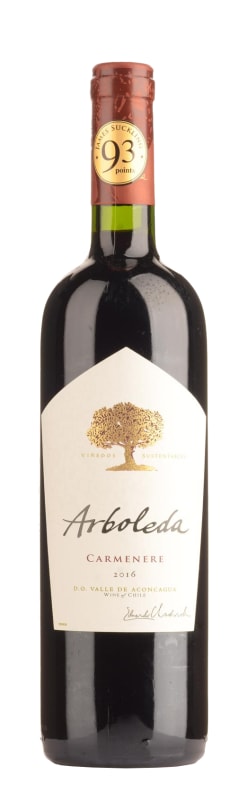


Winemaker Notes
A fine and silky wine with great typicity. Year after year this Carmenere presents elegant tannins in perfect balance with its fresh acidity. Its classic black fruits and balsamic notes come from exceptional fruits of high concentration from Las Vertientes Vineyard, where they undergo a long, slow ripening process. This complex wine achieves its great structure, rounded character and depth during its aging in French oak barrels.
Professional Ratings
-
Decanter
Plush, rounded and soft with a complex toasty nose. The palate is most elegant with nice layers of fruit, herbs, tobacco spice and pencil shavings, followed by a long, elegant finish. Balanced to a tee and overall a really good juicy and textured example of this cultivar.
-
James Suckling
This is a very distinctive carmenere with a lot of Mediterranean herbs, roasted red bell peppers and black tea. Very bright and rather mineral in spite of the density. Restrained tannins for this variety. Drink or hold.


Dark, full-bodied and herbaceous with a spicy kick, Carménère found great success with its move to Chile in the mid-19th century. However, the variety went a bit undercover until 1994 when many plantings previously thought to be Merlot, were profiled as Carménère. Somm Secret— Carménère is both a progeny and a great-grandchild of the similarly flavored Cabernet Franc.

The Aconcagua River runs east from the charming costal town of Valparaiso and bisects the land creating the valley after which it was named. While alluvial soils predominate the Aconcagua Valey along its river throughout, its east-west flow creates drastically different conditions on each of its ends. Its western, seaside vineyards, with clay and stony soils upon gently rolling hills, produce cool-climate varieties such as Sauvignon Blanc, Chardonnay and Pinot Noir. Its inner region is one of Chile’s hottest and produces some of its best red wines. Panquehue in the inner Aconcagua is the site of Chile’s first Syrah vines, planted in 1993.