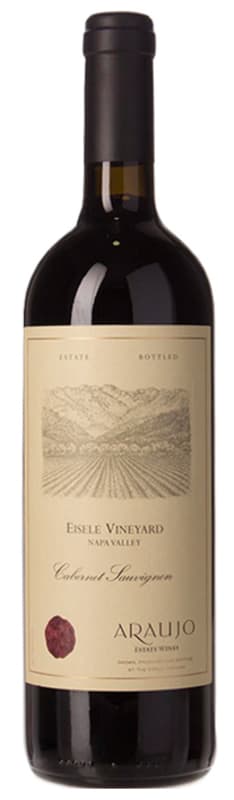


Winemaker Notes
Professional Ratings
-
Wine Spectator
Firm, tight and well-structured, with a medley of floral, spice and dried currant and a touch of herb and cedary oak. Well-integrated, focused and concentrated, with a long, deep, persistent finish. Will reward cellaring.
-
Robert Parker's Wine Advocate
Despite having over 40-plus acres of vineyards in the northeasterly sector of Napa just south of Calistoga, the production at Araujo remains relatively limited, with the flagship wine, the Cabernet Sauvignon Eisele Vineyard, producing between 1,600 and 2,200 cases of wine, and the second wine, the Altagracia, between 800 and 1,200 cases. Add to that another 1,000 cases of Sauvignon Blanc and 300-400 cases of Syrah, and there is just not a lot to go around given the greatness that can be achieved from this vineyard. Much of the credit has to go to proprietors Bart and Daphne Araujo and, of course, their top-notch winemaking team, which has always been led by Francoise Peschon. Araujo’s second wines are among the finest second wines consumers will find in northern California. For example, the Altagracia cuvees, which represent 25-35% of the production, have been outstanding examples of Cabernet Sauvignon. Araujo has done an excellent job with Syrah, which they typically co-ferment with 3-4% Viognier. Sadly, only 300-400 cases are produced. Rating: 94+


One of the most prestigious wines of the world capable of great power and grace, Napa Valley Cabernet is a leading force in the world of fine, famous, collectible red wine. Today the Napa Valley and Cabernet Sauvignon are so intrinsically linked that it is difficult to discuss one without the other. But it wasn’t until the 1970s that this marriage came to light; sudden international recognition rained upon Napa with the victory of the Stag’s Leap Wine Cellars 1973 Cabernet Sauvignon in the 1976 Judgement of Paris.
Cabernet Sauvignon undoubtedly dominates Napa Valley today, covering half of the land under vine, commanding the highest prices per ton and earning the most critical acclaim. Cabernet Sauvignon’s structure, acidity, capacity to thrive in multiple environs and ability to express nuances of vintage make it perfect for Napa Valley where incredible soil and geographical diversity are found and the climate is perfect for grape growing. Within the Napa Valley lie many smaller sub-AVAs that express specific characteristics based on situation, slope and soil—as a perfect example, Rutherford’s famous dust or Stags Leap District's tart cherry flavors.