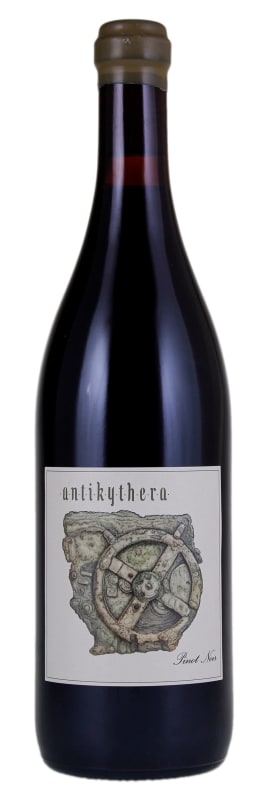


Winemaker Notes
Antikythera is made entirely from Antica Terra's own little, rocky vineyard in the northernmost part of the Eola-Amity Hills. The wine, like the site, is a bit of an anomaly — it tends to defy characterization. There is, in every vintage, an astonishingly extreme, high-pitched aroma of cinnamon-stick coupled with a non-fruit intensity and Barolo-like tannin that speak neither to the Willamette Valley nor in some ways, pinot noir. Intensely mineral, it bears, somehow, a seemingly synesthetic resemblance to the ground from which it was born.
Professional Ratings
-
James Suckling
This is a selection of the estate-vineyard pinot noir that is planted on a solid sheet of parent rock. It has an air of restraint from the first impression of crushed roses and violets with some sappy, fresh and attractive leaves and succulent plant notes and plenty of finely fragrant spices, cocoa, blueberry and dried dark cherry. The palate has a very smooth-honed tannin texture with cherry-pip flavor and a very silky, polished mouth feel. The grain of tannin is super tight and lustrous. The core of this intense tannin creates a sensation of enlivened tension that sets this wine apart, not only in the Antica Terra family, but from the vast majority of wines per se. It is so expressive, within a focused spectrum of characters, and has such energy and presence. A striking expression of pinot noir. Try from 2024.


Thin-skinned, finicky and temperamental, Pinot Noir is also one of the most rewarding grapes to grow and remains a labor of love for some of the greatest vignerons in Burgundy. Fairly adaptable but highly reflective of the environment in which it is grown, Pinot Noir prefers a cool climate and requires low yields to achieve high quality. Outside of France, outstanding examples come from in Oregon, California and throughout specific locations in wine-producing world. Somm Secret—André Tchelistcheff, California’s most influential post-Prohibition winemaker decidedly stayed away from the grape, claiming “God made Cabernet. The Devil made Pinot Noir.”

Running north to south, adjacent to the Willamette River, the Eola-Amity Hills AVA has shallow and well-drained soils created from ancient lava flows (called Jory), marine sediments, rocks and alluvial deposits. These soils force vine roots to dig deep, producing small grapes with great concentration.
Like in the McMinnville sub-AVA, cold Pacific air streams in via the Van Duzer Corridor and assists the maintenance of higher acidity in its grapes. This great concentration, combined with marked acidity, give the Eola-Amity Hills wines—namely Pinot noir—their distinct character. While the region covers 40,000 acres, no more than 1,400 acres are covered in vine.