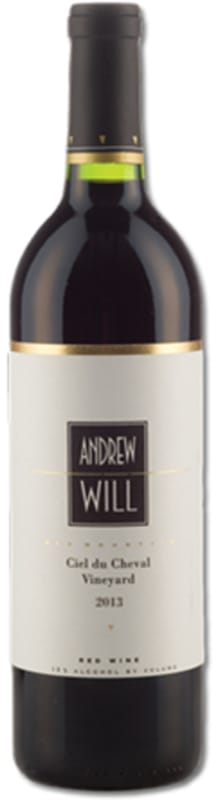


Winemaker Notes
Blend: 56% Merlot, 44% Cabernet Franc
Professional Ratings
-
Wine & Spirits
Chris Camarda’s Ciel du Cheval bottling is often dominated by merlot (56 percent in 2013, the balance cabernet franc). It is often his richest as well, and this wine doesn’t disappoint, with scents of cedar, red plum and plum skin. The flavors are unabashedly intense in a Red Mountain mode, the radiant heat of the place lending uncharacteristic power to a merlot-based red, with the lasting tannins for beef tenderloin.
-
James Suckling
Some neat depth, more cassis and blue fruits on offer here. This also has a floral edge, showing a good depth of aromas. The palate has a smooth deep-set core and a really fresh, plush finish. Nicely layered and long. A blend of 56% merlot and 44% cabernet franc. Drink or hold.
-
Robert Parker's Wine Advocate
Showing classic Red Mountain characteristics of dusty earth, graphite, savory fruits and dried violets, the 800-case 2013 Ciel du Cheval Vineyard is medium to full-bodied, beautifully balanced, elegant and layered on the palate, with present, savory tannin. More closed, reticent and restrained aromatically, this beauty needs 4-5 years of cellaring and will keep through 2033. Made from 56% Merlot and 44% Cabernet that spent 18 months in 35% new oak, this is one of the cases where the terroir supersedes the variety. Rating: 92+
-
Wine Enthusiast
A blend of Merlot (56%) and Cabernet Franc, this wine opens with aromas of flowers, huckleberry, cardamom and green herbs, along with light barrel accents. The flavors are dense and rich but far from over the top, supported by chewy tannins and a fruit-filled finish that sails into the distance. Best after 2020. Cellar Selection.
-
Wine Spectator
Firm in texture, with medium density to the ripe currant and spice flavors, hinting at red pepper as the finish lingers against a moderate grip of tannins. Merlot and Cabernet Franc. Best from 2018 through 2021.


One of the world’s most classic and popular styles of red wine, Bordeaux-inspired blends have spread from their homeland in France to nearly every corner of the New World. Typically based on either Cabernet Sauvignon or Merlot and supported by Cabernet Franc, Malbec and Petit Verdot, the best of these are densely hued, fragrant, full of fruit and boast a structure that begs for cellar time. Somm Secret—Blends from Bordeaux are generally earthier compared to those from the New World, which tend to be fruit-dominant.

As the first recognized wine-growing region in the Pacific Northwest, Yakima Valley is centrally located within Washington’s vast Columbia Valley. The region also includes Washington’s oldest Cabernet Sauvignon vines, Otis Vineyard, planted in 1957, and Harrison Hill Vineyard, planted in 1963. Yakima Valley contains three smaller sub-regions: Rattlesnake Hills, Red Mountain, and Snipes Mountain and is ideal for both red and white wine production. In fact, Yakima Valley is Washington’s most diverse region, boasting more than 40 different grape varieties over about one hundred miles.
The cooler parts of the valley are home to almost half of the Chardonnay and Riesling produced in the state! Both are made in a wide range of styles depending on the conditions of the vineyard site.
But its warmer locations yield a large proportion of Washington’s best Merlot, Syrah and Cabernet Sauvignon. The finest Yakima Valley reds are jam-packed full of red cherry, currant, raspberry or blackberry fruit, as well as cocoa, herb, spice and savory notes, and exhibit a supple texture, great body, focus and length.