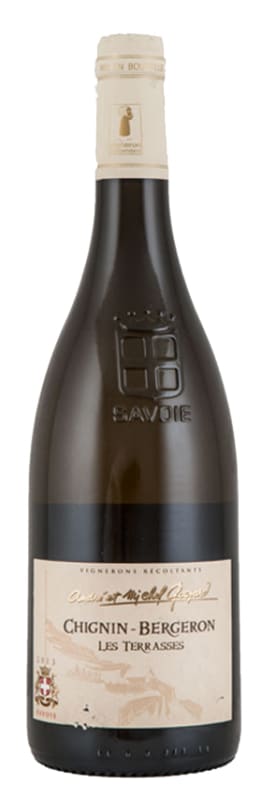


Winemaker Notes


Full and silky in body but also charmingly crisp, Roussanne is native to the Rhône Valley of France. It is responsible for some of the finest Northern Rhône white wines. Roussanne adds richness and acidity to Marsanne’s soft, fruitiness, making age worthy and highly respected whites. Somm Secret—Roussanne takes its name from the French word, roux, meaning rouge or red because of the berry’s pink glow. In California, virtually all of the 339 acres of Roussanne come from true clones brought over by Tablas Creek and John Alban.

Tucked up into the sheltered foothills of the Alps where conditions vary considerably from one spot to the next, the vineyards of Savoie are widely dispersed within three main growing districts. These are Seyssel, Bugey and general Savoie. Within these are 16 different cru vineyard areas.
The region boasts a large number of unique indigenous grapes, incidentally unrelated to any nearby regions’ varieties. The styles here tend toward organic and traditional. In the past, the dynamic summer and winter tourist population consumed most Savoie wine before it could leave the area but the recent interest in esoteric varieties and natural, artisan wine has brought a renewed interest to Savoie.
In Savoie's most northern vineyards near Lake Geneva, the Chasselas grape dominates. Moving south, the white grape known as Altesse (also sometimes called Roussette) is responsible for Roussette de Savoie as well as Roussette de Seyssel.
Just north of Chambéry the white, Jacquère grows in the cru of Jongieux, along with Altesse, and Chardonnay. In the cru of Chautagne, the red grapes Gamay, Pinot Noir, and, especially, the local Mondeuse do well.
Chambéry, once famous for its vermouth, contains the crus of Abymes, Apremont, Arbin, Chignin and Cruet.