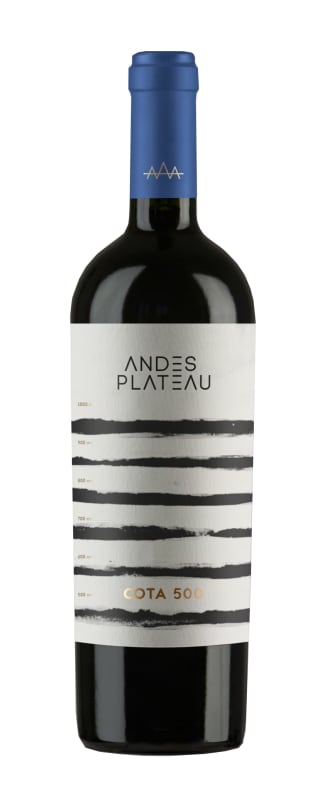


Winemaker Notes
Elegant wine with red fruits, spices and a hint of pepper. Its great tannic structure and freshness make it vibrant and easy to drink. The natural acidity make it very versatile wine that can be paired with a wide variety of food and flavors.
Blend: 94% Cabernet Sauvignon, 3% Syrah, 3% Carignan
Professional Ratings
-
Wine Enthusiast
Fresh cherry and raspberry aromas seem natural and not crowded out by heavy oak. A fleshy palate with plummy weight features ripe berry and cassis flavors that finish bright and fresh, but a little short. Drink now through 2022.
-
Robert Parker's Wine Advocate
The 2017 Cota 500 is pure Cabernet Sauvignon from Cachapoal from a warm year that saw an early harvest of the alluvial vineyards. It fermented with indigenous yeasts and matured in used French barrels for 11 months. The wine is 13.7% alcohol, and it seems to have some more acidity than the previous year I tasted. It feels very fruit-driven, with the oak perfectly integrated with the fruit, and it has classical notes of graphite. There is a stony sensation on the palate that is more a texture than a flavor


A noble variety bestowed with both power and concentration, Cabernet Sauvignon enjoys success all over the globe, its best examples showing potential to age beautifully for decades. Cabernet Sauvignon flourishes in Bordeaux's Medoc where it is often blended with Merlot and smaller amounts of some combination of Cabernet Franc, Malbecand Petit Verdot. In the Napa Valley, ‘Cab’ is responsible for some of the world’s most prestigious, age-worthy and sought-after “cult” wines. Somm Secret—DNA profiling in 1997 revealed that Cabernet Sauvignon was born from a spontaneous crossing of Cabernet Franc and Sauvignon Blanc in 17th century southwest France.

The Maipo Valley is Chile’s most famous wine region. Set in the country’s Central Valley, it is warm and quite dry, often necessitating the use of irrigation. Alluvial soils predominate but are supplemented with loam and clay.
The climate in Maipo is best-suited for ripe, full-bodied reds like Cabernet Sauvignon (the region’s most widely planted grape), Merlot, Syrah and Carmenère, a Bordeaux variety that has found a successful home in Chile.
White wines are also produced with great prosperity, especially near the cooler coast, include Chardonnay and Sauvignon Blanc.