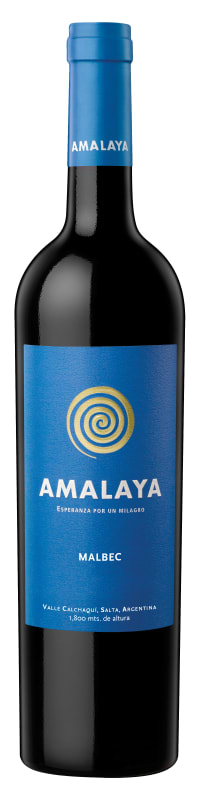


Winemaker Notes
This fresh young Malbec is packed with juicy red fruit and well-integrated soft round tannins.
Blend: 85% Malbec, 10% Tannat, 5% Petit Verdot
Professional Ratings
-
Decanter
Opulent and inviting aromatics, with pretty rose petal, heady sandalwood and plush blueberry on the nose, while the palate is laced with lush plum, a zippy acidity and velvety smooth tannins.
-
James Suckling
Violets, fresh blackberries and blueberries and white pepper. A little herbal but savory on the palate with dense, nicely chewy tannins.
-
Wilfred Wong of Wine.com
COMMENTARY: The 2021 Amalaya Malbec is bright and active on the palate. TASTING NOTES: This wine exhibits aromas and flavors of black fruits, licorice, and dried earth. Enjoy with grilled short ribs. (Tasted: June 24, 2023, San Francisco, CA)
-
Robert Parker's Wine Advocate
The dark red 2021 Malbec is young, primary and fresh, with ripe fruit and nice balance. It is varietal and has notes of violets and small berries and a touch of herbs. It's medium-bodied with medium ripeness and moderate alcohol, 13.9%. In reality, it's not 100% Malbec, as it contains 10% Tannat and 5% Petit Verdot. A serious red for very little money.





Celebrated for its bold flavors and supple texture, Malbec has enjoyed runaway success in Argentina since the late 20th century. The grape originated in Bordeaux, France, where it historically contributed color and tannin to blends. A French agronomist, who saw great potential for the variety in Mendoza’s hot, high-altitude landscape, brought Malbec to Argentina in 1868. Somm Secret—If you’re trying to please a crowd, Malbec is generally a safe bet with its combination of dense fruit and soft tannins.

The Salta region in northern Argentina is home to world’s highest vineyards. Near the town of Payogasta, the Colomé Altura Máxima vineyard is planted at 10,206 feet in elevation.
Salta is part of the Calchaquí Valley, which benefits from more than 300 days of sun per year, subjecting its vines to considerable ultraviolet radiation. The valley experiences strong high altitude winds, even in the “lower” vineyards, which are planted at 5,413 feet. Because of these elevations and resulting extreme conditions, vines produce lower yields and thicker-skinned grapes, resulting in concentrated, aromatic and well-structured wines.
In a truly unique region, the highly aromatic variety, Torrontes, thrives; intense sun exposure allows full ripening, while cooling winds maintain the grapes’ acidity levels and phenolic balance.
Malbec, Cabernet Sauvignon, Bonarda, Syrah, and, particularly, Tannat have the most potential among reds.
Upscale hotels, beautiful colonial architecture, a majestic Andean backdrop and impressive food and wine make the area attractive among tourists as well.
Salta is the fourth most important Argentine wine-producing region after Mendoza, San Juan, and La Rioja. Its oldest vineyards were planted in 1862.