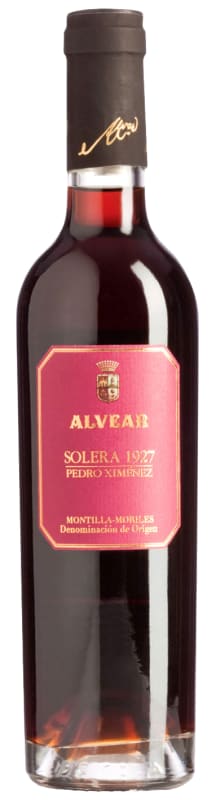


Winemaker Notes
#5 Wine Enthusiast Top 100 of 2017
The vineyards, located at an elevation of 1,050 feet, are comprised of the famous chalky soil called Albariza and the 40-year-old vines produce extremely low yields. The grapes were hand-harvested at the peak of maturity and dried on mats in the sun. This is one of the oldest wines in the cellar since the Solera was started at the beginning of the last century.
Professional Ratings
-
Jeb Dunnuck
The NV Pedro Ximénez Solera 1927 (L1 190) is deep amber-hued and delivers a powerful nose of ripe plums, caramelized figs, toffee, espresso roast, and white chocolate that opens up beautifully with time in the glass. This carries to a powerful, decadent monster of a dessert wine that has balancing acidity, terrific overall balance, and a finish that won't quit. It's a standalone (maybe with a cigar) dessert wine that will probably live forever.
-
Wilfred Wong of Wine.com
COMMENTARY: The Alvear Solera 1927 Pedro Ximénez offers a decadent wine experience. TASTING NOTES: This wine offers complexities that few wines can. Its aromas and flavors of crushed nuts, iodine, and chalk nicely balance out the wine's brown sugar sweetness. Serve with banana bread topped with molasses and walnuts. (Tasted: July 21, 2020, San Francisco, CA)
-
Vinous
The NV Solera 1927 is a sun-dried Pedro Ximénez wine sourced from Sierra de Montilla. Aged for 20 years in a very old solera, this mahogany-colored wine offers aromas of caramel, saffron and tar, along with licorice and herbal notes. Very sweet and concentrated, the palate reveals a wild herb core with a balanced and potent mouthfeel. Despite its sweetness, it maintains balance with a warm, rich heart—a unique sip from Montilla.
-
James Suckling
A pretty mind-blowing sweet wine with so much density and sweetness, offering syrup, toffee, burnt-sugar and chocolate flavors, as well as espresso coffee and toffee pudding. It’s full and very, very sweet. Caramel at the end. From a solera established in 1927.
-
Wine Spectator
Scorched sesame, tof- fee, date and black tea notes rumble through, along with walnut and fig accents. Sticky, viscous and sweet, this delivers an exotic experience


Apart from the classics, we find many regional gems of different styles.
Late harvest wines are probably the easiest to understand. Grapes are picked so late that the sugars build up and residual sugar remains after the fermentation process. Ice wine, a style founded in Germany and there referred to as eiswein, is an extreme late harvest wine, produced from grapes frozen on the vine, and pressed while still frozen, resulting in a higher concentration of sugar. It is becoming a specialty of Canada as well, where it takes on the English name of ice wine.
Vin Santo, literally “holy wine,” is a Tuscan sweet wine made from drying the local white grapes Trebbiano Toscano and Malvasia in the winery and not pressing until somewhere between November and March.
Rutherglen is an historic wine region in northeast Victoria, Australia, famous for its fortified Topaque and Muscat with complex tawny characteristics.

Montilla-Moriles is a DO wine zone in Andalucia, in southern Spain, just south of Córdoba city but inland from the coast. Historically the wines of Montilla-Moriles made their way into the sherries made in Jerez. But once it was awarded DO status in 1945, Montilla-Moriles began to establish its own identity. The chalky and sandy soils combined with extremely hot temperatures are best to produce Pedro Ximénez, which accounts for nearly three quarters of the region’s production, some of which is still legally sold to Jerez and Málaga producers. The unique conditions of Montilla-Moriles allow for Pedro Ximénez to be bottled also in the Vinos Dulces Naturales (naturally sweet) style, a non-fortified style for which the region is recognized.
Muscat and Lairén are also produced for blending. Palomino is not suited to the extreme conditions of the area.
The basic types of Montilla-Moriles DO wines include young fruity wines, aged (crianza) wines, and generosos, which are aged in a solera system similar to those in Jerez. The resulting styles of generosos, simply known as, Montilla, while similar to sherry, perhaps display a bit less finesse given they are aged away from the cooling effects of the Atlantic.