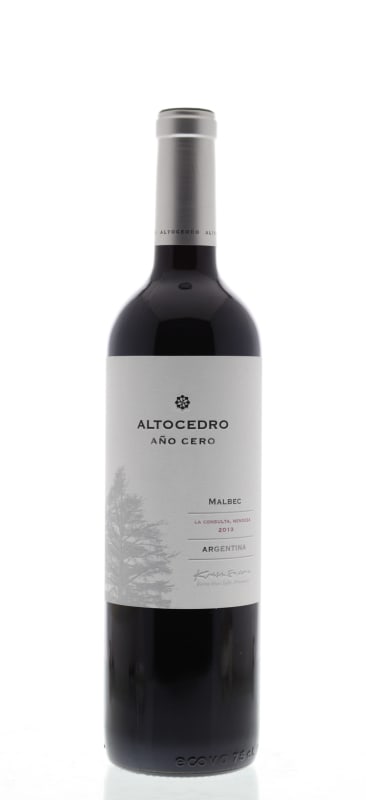


Winemaker Notes
This wine is the product of Altocedro's passion for creating great wines from one of the best grape growing regions in the world for the Malbec: La Consulta in Mendoz's Uco Valley. The grapes were carefully selected from mature vines (7-49 years old), fermented in small concrete tanks and 30% of the wine was aged 8 months in French oak barrels to obtain a balanced concentration of color, aromas and fruit flavors.
Professional Ratings
-
Wilfred Wong of Wine.com
Owner/winemaker Karim knows what he is doing, as a top winemaker he is as serious as they come, but he does not take himself that way. The 2013 Altocedro Ano Cero Malbe is a really fine effort. Medium to dark ruby color; bold and serious black fruit and dust in the nose, excellent depth and energy; medium bodied, firm yet roundish on the palate; dry, very good acidity, well balanced; excellent dust and earth in the flavors, black fruit too; medium to long finish, some tannins in the aftertaste. I'll take a grilled rib-eye of beef, pink in the middle please and a couple glass of this wine. (Tasted: June 17, 2015, San Francisco, CA)
-
James Suckling
Plenty of ripe fruit with leather and spice character in this wine from La Consulta in Valle de Uco. Full body, fine tannins and a dried fruit, chocolate aftertaste. Slightly old style but delicious. Drink now.


Celebrated for its bold flavors and supple texture, Malbec has enjoyed runaway success in Argentina since the late 20th century. The grape originated in Bordeaux, France, where it historically contributed color and tannin to blends. A French agronomist, who saw great potential for the variety in Mendoza’s hot, high-altitude landscape, brought Malbec to Argentina in 1868. Somm Secret—If you’re trying to please a crowd, Malbec is generally a safe bet with its combination of dense fruit and soft tannins.

By far the largest and best-known winemaking province in Argentina, Mendoza is responsible for over 70% of the country’s enological output. Set in the eastern foothills of the Andes Mountains, the climate is dry and continental, presenting relatively few challenges for viticulturists during the growing season. Mendoza, divided into several distinctive sub-regions, including Luján de Cuyo and the Uco Valley, is the source of some of the country’s finest wines.
For many wine lovers, Mendoza is practically synonymous with Malbec. Originally a Bordelaise variety brought to Argentina by the French in the mid-1800s, here it found success and renown that it never knew in its homeland where a finicky climate gives mixed results. Cabernet Sauvignon, Syrah, Merlot and Pinot Noir are all widely planted here as well (and sometimes even blended with each other or Malbec). Mendoza's main white varieties include Chardonnay, Torrontés, Sauvignon Blanc and Sémillon.