

Winemaker Notes
Pairs well with grilled beef, chicken, and pork.
Professional Ratings
-
Robert Parker's Wine Advocate
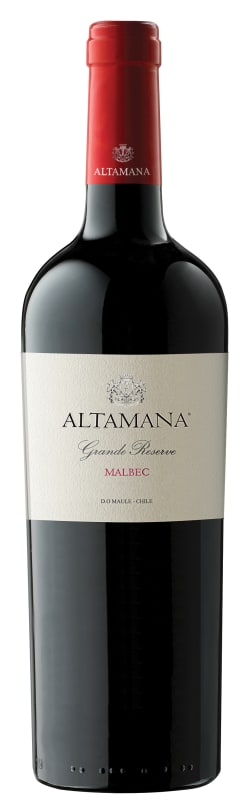
The new vintages of the single-vineyard reds were not yet bottled, so I only tasted a still wine, the 2015 Grande Reserve Malbec from Maule, a blend from their two vineyards, Constanza and Corinto, both dry-farmed. The vinification followed the classical recipe with 25 days of total maceration. Seventy-five percent of the wine matured in used French oak barrels for nine months. It's still quite spicy and smoky, marked by the oak, with the floral character of the Malbec in the background. The palate is quite tasty, with oak-related flavors that give it a commercial profile. It's nicely crafted, but I'd love to see it with a little less oak. Give it a little more time in bottle. Very good value. 26,000 bottles were filled in September 2016.
-
Wine Enthusiast
Ripe, slightly desiccated aromas of prune, raisin and blackberry include a horsey note. A full-bodied palate weighs in as mildly flabby and heavy, while dark, charred berry and toast flavors are blackened. On the finish, chalky dryness lends focus to an otherwise ripe finish.


Celebrated for its bold flavors and supple texture, Malbec has enjoyed runaway success in Argentina since the late 20th century. The grape originated in Bordeaux, France, where it historically contributed color and tannin to blends. A French agronomist, who saw great potential for the variety in Mendoza’s hot, high-altitude landscape, brought Malbec to Argentina in 1868. Somm Secret—If you’re trying to please a crowd, Malbec is generally a safe bet with its combination of dense fruit and soft tannins.

Maule is the Central Valley’s most southern and coolest zone, reaching a southern latitude of 35°S, yet it is still warmer and drier than Bío-Bío to its south. The Maule Valley enjoys success with a unique set of grapes.
It lays claim to the local variety, Pais (synonymous with Tinta Pais, which is actually Tempranillo), which has dominated much of the region’s area under vine until the recent past. Now many growers, not confined by the tradition and regulations of the Old World, also successfully grow Cabernet Sauvignon.
While Maule’s total area under vine remains relatively static, its old Carignan vineyards are undergoing a great revival. The VIGNO (Vignadores del Carignan Vintners) group, an association in charge of promoting this long-forgotten variety, is getting fantastic results from the old vines in its dry-farmed coastal zones.
The Maule includes the subregions of Talca, San Clemente, San Javier, Parral, Linares and Cauquenes.