


Winemaker Notes
Clear, gold-yellow in color. Pronounced and intense nose, fruity (pear, apricot, peach) fresh butter and woody notes. Full-bodied, multi-layered, mineral fruity and salty.
Pair with all types of seafood, white meat and poultry.
Professional Ratings
-
Decanter
Intense and complex, it displays slightly lifted scents of meadow blossom, bruised apple and lime, with suggestions of creamy pastries in the background. Great energy on the palate, where the youthful fleshiness is supported by firm, tangy acidity. Although still finding its feet, 2021 is a benchmark vintage for Löwengang Chardonnay – a wine with a radiant future.
-
James Suckling
A classy wine with a profound and complex profile. The nose is fully focused on tension, with vibrant aromas of pink grapefruit, linden tree flowers, apricots, Mirabelle plums, green apples and toast. Oily texture with zesty, integrated acidity. It’s long, smooth, full-bodied and weighted in the finish. Candied fruit aftertaste. From biodynamically grown grapes with Demeter certification. Drinkable now, but it will last for a decade.
-
Wine Spectator
Hints of graphite and smoke underscore flavors of persimmon, plum skin, white cherry and blanched almond in this clean-cut, salty white. There's textural richness and density on the palate, though this is medium-bodied and elegant overall. Lightly honeyed throughout, with a long, fragrant finish of mountain herb and preserved lemon notes. Chardonnay. Drink now through 2031. 5,800 cases made, 230 cases imported.





The Alois Lageder winery was established in 1823 and today it is managed by the family’s fifth and sixth generation. The winery is located in Magrè, in the southern part of the Alto Adige region. With a holistic approach, creativity and an experimental spirit Alois Lageder produces wines that reflect the diversity of Alto Adige. We are committed to biodynamic wine production and continually expand our knowledge in this area. In addition to the family owned vineyards (135 acres / 55 hectares) the winery collaborates with around 80 grape growers (247 acres / 100 hectares).
Alois Lageder believes that organic and biodynamic cultivation greatly enriches the landscape. One of the goals of biodynamics is to build a closed farm organism and to increase diversity and fertility. The winery collaborates with mountain farmers who bring their cows and sheep in the winery’s vineyards during the autumn and winter months, following the old tradition of transhumance. This helps to increase the vitality of the grapes and the biodiversity.
A few years ago, Alois Lageder started to cooperate with some local winegrowers from the wider Dolomiti area, which is why Pinot Grigio and Pinot Bianco have the Dolomiti appellation. Today, this collaboration and organic farming are met with enormous interest allowing us to expand this project giving the wines their own name: Terra Alpina. The Terra Alpina wines are characterized by a unique interplay of harsh Alpine and sunny Mediterranean influences.

One of the most popular and versatile white wine grapes, Chardonnay offers a wide range of flavors and styles depending on where it is grown and how it is made. While it tends to flourish in most environments, Chardonnay from its Burgundian homeland produces some of the most remarkable and longest lived examples. California produces both oaky, buttery styles and leaner, European-inspired wines. Somm Secret—The Burgundian subregion of Chablis, while typically using older oak barrels, produces a bright style similar to the unoaked style. Anyone who doesn't like oaky Chardonnay would likely enjoy Chablis.
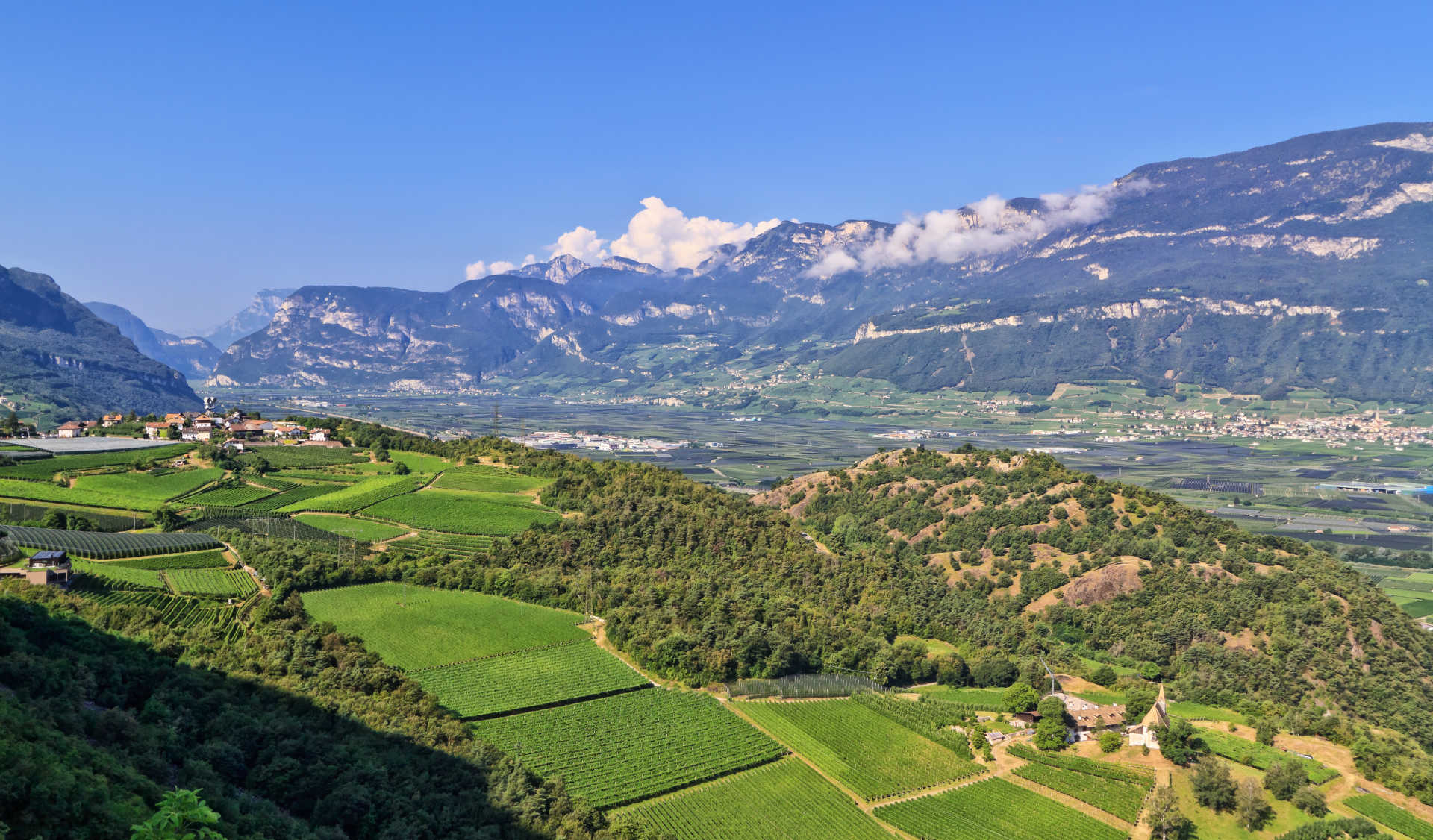
A mountainous northern Italian region heavily influenced by German culture, Trentino-Alto Adige is actually made up of two separate but similar regions: Alto Adige and Trentino.
Trentino, the southern half, is primarily Italian-speaking and largely responsible for the production of non-native, international grapes. There is a significant quantity of Chardonnay, Pinot Grigio and Merlot produced. But Trentino's native and most unique red variety, Teroldego, while still rare, is gaining popularity. It produces a deeply colored red wine rich in wild blackberry, herb, coffee and cocoa.
The rugged terrain of German-speaking Alto Adige (also referred to as Südtirol) focuses on small-scale viticulture, with great value placed on local varieties—though international varieties have been widely planted since the 1800s. Sheltered by the Alps from harsh northerly winds, many of the best vineyards are at extreme altitude but on steep slopes to increase sunlight exposure.
Dominant red varieties include the bold, herbaceous Lagrein and delicate, strawberry-kissed, Schiava, in addition to some Pinot Nero.
The primary white grapes are Pinot grigio, Gewürztraminer, Chardonnay and Pinot blanc, as well as smaller plantings of Sauvignon blanc, Müller Thurgau. These tend to be bright and refreshing with crisp acidity and just the right amount of texture. Some of the highest quality Pinot grigio in Italy is made here.