


Winemaker Notes
In the 1930s Manzoni Bianco was created by Prof. Luigi Manzoni, director of the renowned Conegliano Research Center, by crossing Riesling and Pinot Bianco. Its characteristics include loose-berried clusters, thick skins, high acid levels, and lower concentrations of sugar. Those features make Manzoni Bianco attractive for Alto Adige given today’s increasingly extreme weather patterns. Lageder accentuates its flavor profile by leaving the grape juice in contact with the skins for several days.
Professional Ratings
-
James Suckling
Manzoni bianco is a super fresh grape variety, a valuable resource in view of the rising temperatures in this era of climate change. Aromas of pears, white peaches, lime peel and lemon leaves. It’s soft on the palate, with a silky texture, sharp acidity, peach flavors and a polished finish in spite of its citrus peel aftertaste.
-
Wine Spectator
There's a soft, satiny feel to this distinctive, medium-bodied white. A tangy streak of salinity and some light chalkiness do more than the soft orange peel acidity to bring lively balance to flavors of baked melon and pear, dried thyme, ground nutmeg, walnut skin and honeycomb.





The Alois Lageder winery was established in 1823 and today it is managed by the family’s fifth and sixth generation. The winery is located in Magrè, in the southern part of the Alto Adige region. With a holistic approach, creativity and an experimental spirit Alois Lageder produces wines that reflect the diversity of Alto Adige. We are committed to biodynamic wine production and continually expand our knowledge in this area. In addition to the family owned vineyards (135 acres / 55 hectares) the winery collaborates with around 80 grape growers (247 acres / 100 hectares).
Alois Lageder believes that organic and biodynamic cultivation greatly enriches the landscape. One of the goals of biodynamics is to build a closed farm organism and to increase diversity and fertility. The winery collaborates with mountain farmers who bring their cows and sheep in the winery’s vineyards during the autumn and winter months, following the old tradition of transhumance. This helps to increase the vitality of the grapes and the biodiversity.
A few years ago, Alois Lageder started to cooperate with some local winegrowers from the wider Dolomiti area, which is why Pinot Grigio and Pinot Bianco have the Dolomiti appellation. Today, this collaboration and organic farming are met with enormous interest allowing us to expand this project giving the wines their own name: Terra Alpina. The Terra Alpina wines are characterized by a unique interplay of harsh Alpine and sunny Mediterranean influences.

There are hundreds of white grape varieties grown throughout the world. Some are indigenous specialties capable of producing excellent single varietal wines. Each has its own distinct viticultural characteristics, as well as aroma and flavor profiles.
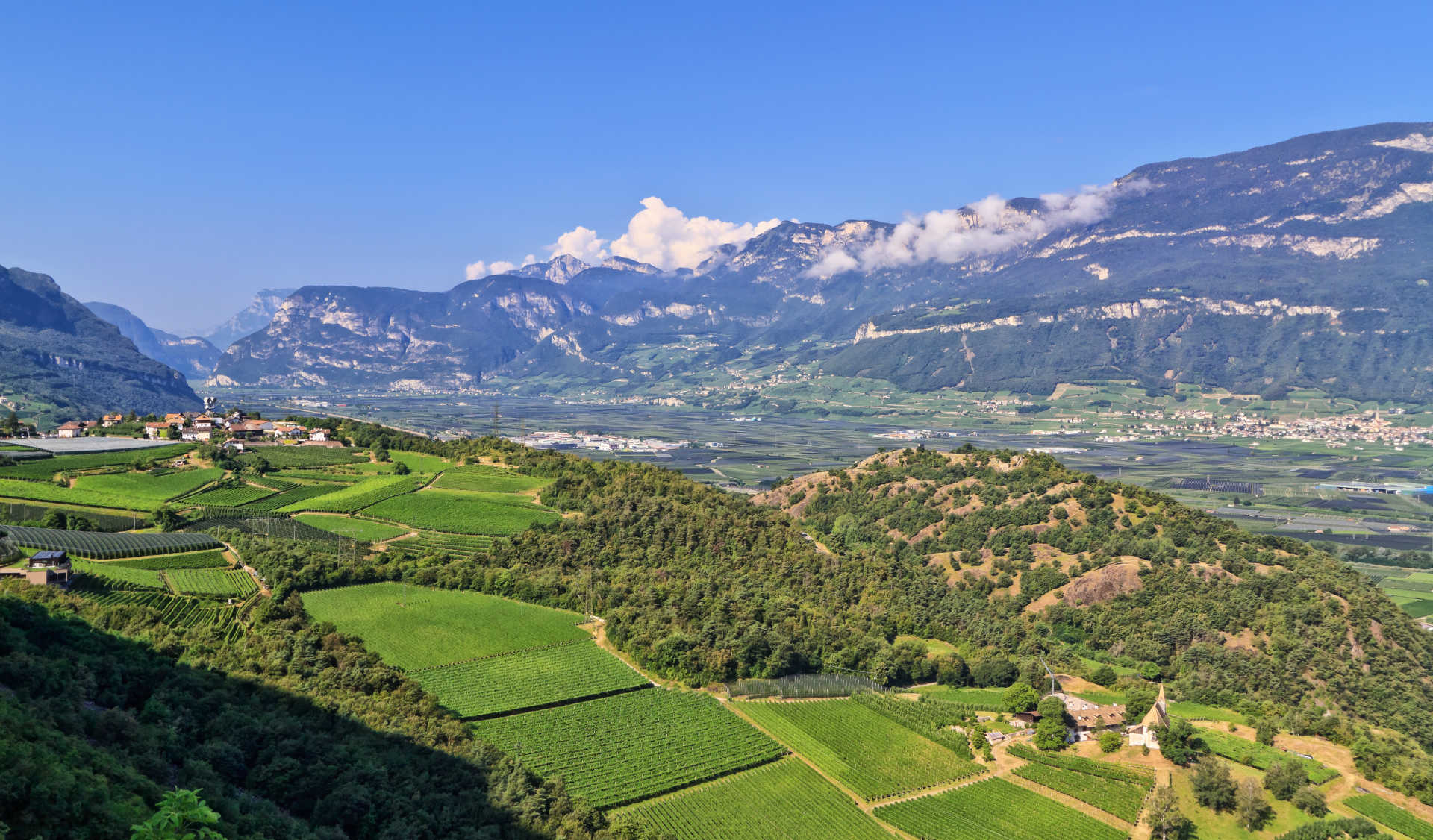
A mountainous northern Italian region heavily influenced by German culture, Trentino-Alto Adige is actually made up of two separate but similar regions: Alto Adige and Trentino.
Trentino, the southern half, is primarily Italian-speaking and largely responsible for the production of non-native, international grapes. There is a significant quantity of Chardonnay, Pinot Grigio and Merlot produced. But Trentino's native and most unique red variety, Teroldego, while still rare, is gaining popularity. It produces a deeply colored red wine rich in wild blackberry, herb, coffee and cocoa.
The rugged terrain of German-speaking Alto Adige (also referred to as Südtirol) focuses on small-scale viticulture, with great value placed on local varieties—though international varieties have been widely planted since the 1800s. Sheltered by the Alps from harsh northerly winds, many of the best vineyards are at extreme altitude but on steep slopes to increase sunlight exposure.
Dominant red varieties include the bold, herbaceous Lagrein and delicate, strawberry-kissed, Schiava, in addition to some Pinot Nero.
The primary white grapes are Pinot grigio, Gewürztraminer, Chardonnay and Pinot blanc, as well as smaller plantings of Sauvignon blanc, Müller Thurgau. These tend to be bright and refreshing with crisp acidity and just the right amount of texture. Some of the highest quality Pinot grigio in Italy is made here.