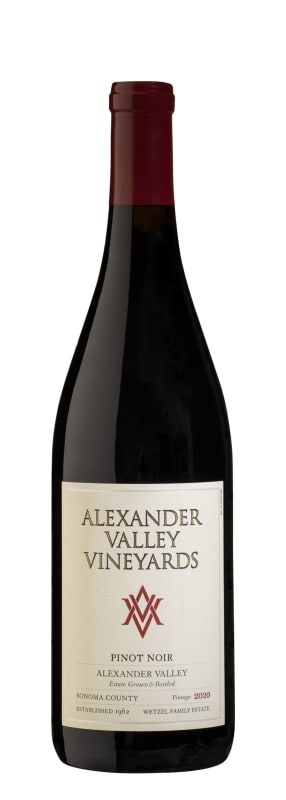


Winemaker Notes
This Estate Pinot Noir is classically styled with balanced acidity and complex flavors. Fragrant aromas of black and red cherry, raspberry, vanilla and oak fill the glass. This is a soft wine with silky texture and bright flavors of fresh cherry, blueberry, plum, barrel spice and a hint of vanilla. There is a long lingering finish on this lush wine.
Professional Ratings
-
James Suckling
Racy strawberries, raspberries and some mossy herbs on the nose. A hint of white pepper, too. Pretty elegant, nuanced and ethereal on the medium-bodied palate with some lovely red-berry fruit leading to a well-reserved finish. Already excellent, but would rate higher if there was a bit more depth to the palate. Drink now.


Thin-skinned, finicky and temperamental, Pinot Noir is also one of the most rewarding grapes to grow and remains a labor of love for some of the greatest vignerons in Burgundy. Fairly adaptable but highly reflective of the environment in which it is grown, Pinot Noir prefers a cool climate and requires low yields to achieve high quality. Outside of France, outstanding examples come from in Oregon, California and throughout specific locations in wine-producing world. Somm Secret—André Tchelistcheff, California’s most influential post-Prohibition winemaker decidedly stayed away from the grape, claiming “God made Cabernet. The Devil made Pinot Noir.”

Nearly a northern extension of Napa Valley, Alexander Valley starts just north of the small, Knights Valley, and is just a few minutes drive from the Napa town of Calistoga. It is Sonoma County’s hottest AVA. But the Russian River, which runs through the valley, creates cooler pockets and its soft, alluvial soil is ideal for grape growing, especially Cabernet Sauvignon. In fact, some believe that Alexander Valley Cabernets truly rival the best from Napa Valley and many of the heavy-hitter producers have largely invested here.
In addition to Cabernet Sauvignon, which makes up over 50% of plantings, Merlot and old vine Zinfandel thrive here. Ample, fleshy Chardonnay and Sauvignon Blanc dominate white wine production. Some old-vine plantings of Grenache have also been discovered and more recent experiments with Sangiovese and Barbera show great promise.