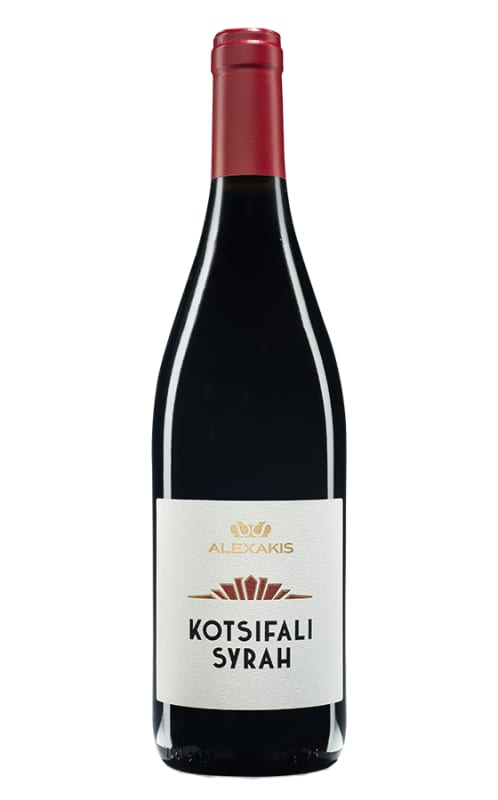


Winemaker Notes
Explosive fruity profile with vanilla and sweet spice undertones. Rich body and a beautifully presented velvet-like tannins frame the juicy cherry and plum flavors. The acidity of the Alexakis Kotsifali-Syrah blend is fine and works expertly with the smooth alcohol. This delicate balance on the palate and the complexity on the nose make it an age-worthy wine.
Blend: 60% Kotsifali, 40% Syrah
Professional Ratings
-
James Suckling
A full-bodied red with juicy fruit and lots of walnut and balsamic character. Rather chewy, but shows good depth and flavor. Drink or hold.
-
Robert Parker's Wine Advocate
This is a blend of 60% Kotsifali and 40% Syrah from the island of Crete. The Alexakis 2018 Kotsifali Syrah shows some bacon fat and toasted spice over dried fruit. There is a slightly evolved side to the wine, and it feels like those characteristic Syrah notes have taken over. Savory and smoked meat fold into tart fruit flavors and an acidic finish.


With hundreds of red grape varieties to choose from, winemakers have the freedom to create a virtually endless assortment of blended red wines. In many European regions, strict laws are in place determining the set of varieties that may be used, but in the New World, experimentation is permitted and encouraged resulting in a wide variety of red wine styles. Blending can be utilized to enhance balance or create complexity, lending different layers of flavors and aromas. For example, a red wine blend variety that creates a fruity and full-bodied wine would do well combined with one that is naturally high in acidity and tannins. Sometimes small amounts of a particular variety are added to boost color or aromatics. Blending can take place before or after fermentation, with the latter, more popular option giving more control to the winemaker over the final qualities of the wine.
How to Serve Red Wine
A common piece of advice is to serve red wine at “room temperature,” but this suggestion is imprecise. After all, room temperature in January is likely to be quite different than in August, even considering the possible effect of central heating and air conditioning systems. The proper temperature to aim for is 55° F to 60° F for lighter-bodied reds and 60° F to 65° F for fuller-bodied wines.
How Long Does Red Wine Last?
Once opened and re-corked, a bottle stored in a cool, dark environment (like your fridge) will stay fresh and nicely drinkable for a day or two. There are products available that can extend that period by a couple of days. As for unopened bottles, optimal storage means keeping them on their sides in a moderately humid environment at about 57° F. Red wines stored in this manner will stay good – and possibly improve – for anywhere from one year to multiple decades. Assessing how long to hold on to a bottle is a complicated science. If you are planning long-term storage of your reds, seek the advice of a wine professional.

As one of Greece’s largest island’s, its wines enjoyed high glory during the Middle Ages. Today Crete is full of ambitious winemakers with the city of Heraklion as its viticultural hub.