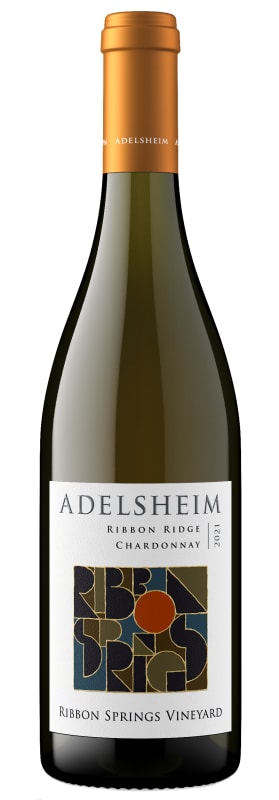


Winemaker Notes
Flush with aromas of white lilac, wet stone, fresh ginger, and white peach, this races across the palate with a destination in mind. There is a radiant, tight core at its heart tempered by a graceful layering of texture and weight. I think this wine has a long life ahead of it.
Professional Ratings
-
Wine Enthusiast
The Ribbon Springs once again lands in the intersection of finesse and opulence. White-peach and Bosc pear notes fill the nose, accented by chamomile and the scent of two pieces of quartz coming together to spark a fire. Weighty butter, orchard fruit and lemon-verbena tea flavors are ably backed by crisp acidity.
-
James Suckling
A very linear and precise wine with aromas of salt, minerals, lime zest and savory herbs. Green fruit flavors lead to a long, crystalline finish.
-
Vinous
A very linear and precise wine with aromas of salt, minerals, lime zest and savory herbs. Green fruit flavors lead to a long, crystalline finish.
-
Robert Parker's Wine Advocate
The 2021 Chardonnay Ribbon Springs Vineyard was matured for 12 months in French oak and finished with five months in stainless steel. It unfolds slowly on the nose to reveal scents of lemon peel, panna cotta, allspice and honey. The light-bodied palate pairs understated flavors with vibrant acidity, and it has a long, savory finish.
-
Wine Spectator
Fragrant and supple, showing lively flavors of apple and kiwi laced with lemon blossom and spice notes. Drink now. 2,721 cases made.



Established in 1971, Adelsheim is a family-owned and operated winery with estate vineyards located in Oregon's northern Willamette Valley. Over the past 41 years, the Adelsheim Vineyard estate has grown to include twelve exception vineyard sites throughout the Valley, totaling 237 acres. Company co-founder, David Adelsheim, has done work throughout the years to benefit both the Oregon and American wine industries: grape and wine research, wine labeling, industry education, and promotion. He is recognized for his "outstanding service" to the industry and has played a vital role in building the Oregon wine industry and establishing its reputation worldwide. Today, he leads a current generation of passionate staff devoted to leading the industry in crafting consistently transcendent wines.

One of the most popular and versatile white wine grapes, Chardonnay offers a wide range of flavors and styles depending on where it is grown and how it is made. While it tends to flourish in most environments, Chardonnay from its Burgundian homeland produces some of the most remarkable and longest lived examples. California produces both oaky, buttery styles and leaner, European-inspired wines. Somm Secret—The Burgundian subregion of Chablis, while typically using older oak barrels, produces a bright style similar to the unoaked style. Anyone who doesn't like oaky Chardonnay would likely enjoy Chablis.

Ribbon Ridge is a regular span of uplifted, marine, sedimentary soils (called Willakenzie), whose highest ridge elevations twist like a ribbon. An early settler from Missouri named Colby Carter noticed this unique topography and gave the region its name in 1865—though it wasn’t declared its own AVA until 140 years later, in 2005. The AVA is enclosed by mountains on all sides between Yamhill-Carlton and the Chehalem Mountains, and is actually part of the larger Chehalem Mountains AVA. Its soils have a finer texture than its neighbors with parent materials composed of sandstone, siltstone, and mudstone. Given its presence of natural aquifers in this five square mile area, most vineyards are actually easily dry farmed!