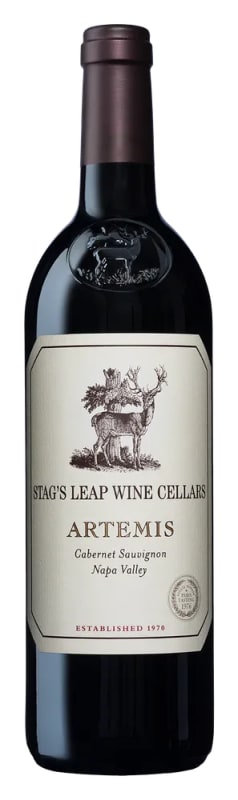


Winemaker Notes
The nose reveals rich aromas of dark fruits, tobacco, ripe figs, raspberries, and cherry compote, with a subtle hint of oak. On the palate, a silky mouthfeel leads into a long, savory finish, showcasing milk chocolate, dark cherry, and boysenberry notes.
Blend: 98% Cabernet Sauvignon, 1.5% Cabernet Franc, 0.5% Petit Verdot
Professional Ratings
-
Decanter
A blend of 98% Cabernet Sauvignon, 1.5% Cabernet Franc, and 0.5% Petit Verdot, aged for 15 months in 55% new French oak and 45% older French oak barrels. No matter the vintage, this winery consistently delivers. Artemis offers classic blackberry fruit, sagebrush, and loamy earth, with tobacco influences. Medium- to full-bodied on the palate, with precise, superfine tannins and layers of cherry, blackberry, graphite, and perfumed violets building toward a finish full of energy, drive, and tension. Ideal for enjoying on its own before a meal and throughout dinner. The tannins in this vintage are notably gentle and approachable, making it an excellent candidate for early drinking.
-
James Suckling
A cool, slightly restrained expression gives an elegant spin to this dark-fruited, well-balanced and savory wine. Black cherries and blueberries, cocoa and graphite, tobacco leaves and iron flavors. Full-bodied but not heavy.
-
Jeb Dunnuck
Based on 98% Cabernet Sauvignon, 1.5% Cabernet Franc, and a tiny splash of Petit Verdot that spent 15 months in 55% new French oak, the 2022 Cabernet Sauvignon Artemis shows a deeper ruby/plum hue as well as beautiful aromatics of cassis, ripe black cherries, graphite, and spring flowers. It's medium-bodied and balanced on the palate, with a supple, elegant mouthfeel and nicely polished tannins. There's not a chance I'd guess this as a 2022 from Napa in a blind tasting.
-
Vinous
The 2022 Cabernet Sauvignon Artemis is a terrific introduction to the range. Soft contours wrap around a core of red-toned fruit, spice, tobacco and cedar. All the elements are so well balanced. This mid-weight, supple Cabernet Sauvignon is a total delight.
-
Robert Parker's Wine Advocate
Approximately three-fourths of the 2022 Cabernet Sauvignon Artemis comes from Atlas Peak, where the Antinoris have a substantial vineyard. It's reasonably floral and fresh on the nose, with hints of violets alongside cherries and redcurrants. Full-bodied and round, it may lack a bit of richness and depth compared to the 2021, but it's a supple, easy-drinking effort that won't disappoint unless you're expecting single-vineyard quality.


One of the most prestigious wines of the world capable of great power and grace, Napa Valley Cabernet is a leading force in the world of fine, famous, collectible red wine. Today the Napa Valley and Cabernet Sauvignon are so intrinsically linked that it is difficult to discuss one without the other. But it wasn’t until the 1970s that this marriage came to light; sudden international recognition rained upon Napa with the victory of the Stag’s Leap Wine Cellars 1973 Cabernet Sauvignon in the 1976 Judgement of Paris.
Cabernet Sauvignon undoubtedly dominates Napa Valley today, covering half of the land under vine, commanding the highest prices per ton and earning the most critical acclaim. Cabernet Sauvignon’s structure, acidity, capacity to thrive in multiple environs and ability to express nuances of vintage make it perfect for Napa Valley where incredible soil and geographical diversity are found and the climate is perfect for grape growing. Within the Napa Valley lie many smaller sub-AVAs that express specific characteristics based on situation, slope and soil—as a perfect example, Rutherford’s famous dust or Stags Leap District's tart cherry flavors.