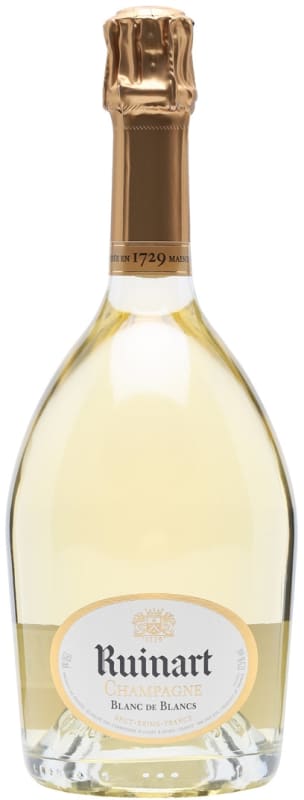


Winemaker Notes
A supple, harmonious attack on the palate, firm but rounded. A voluptuous texture and vinosity that is not excessive, supported by excellent freshness. A very refreshing mineral finish.
At first very intense on the nose, giving way to fresh fruit notes, particularly ripe citrus and exotic fruits (pineapple). A highly refined floral second nose with notes of linden and white fruits (white peach).
Beautiful pale yellow color with glints of gold and green, a vibrant, luminous color. Active effervescence with a fine, persistent release of bubbles.
Ruinart Blanc de Blancs is a champagne for all occasions: aperitifs, lunch, dinner or celebratory meals. The vivacity is a perfect complement to seafood and white fish, pairing perfectly with dishes such as sea scallop carpaccio and sea bream tartare.
Professional Ratings
-
Tasting Panel
Cool initial suggestions of lime, chalk, and buttered toast make way for decidedly sunny aromas of yellow apple, Anjou pear, peach and pluot sprinkled with white flowers. Making a luxurious texture in perfect balance with moderately tangy acidity, the fruit takes on a bit of a honeyed tropical cast in the mouth, with pineapple and mango ushering in a finishing dash of earthy lemon pepper on the long, fresh finish. The effect is effortlessly stylish.
-
Wine Enthusiast
Ruinart is a specialist in Blanc de Blancs Champagne. This wine is finely balanced between maturity and taut fresh, mineral-driven fruit.
-
Wine Spectator
A toasty blanc de blanc with an aromatic overtone of smoke and lemon peel notes accenting flavors of poached apricot, brioche, passion fruit coulis and fresh thyme. Fine and creamy in texture, with a racy finish.
-
Wilfred Wong of Wine.com
COMMENTARY: The Ruinart Blanc de Blancs has always been one of our household favorites, and the current cuvée is alluring and pleasing from start to finish. TASTING NOTES: This wine is refined, steady, and attractive, with aromas and flavors of tart and ripe apple and a hint of spice. Enjoy it with ikura sashimi appetizers. (Tasted: July 14, 2022, Menlo Park, CA)
-
James Suckling
Lemon tart, grapefruit and almonds on the nose, followed by a rounded, silky palate with soft bubbles. Pretty lemon curd and vanilla flavors to close.
-
Jeb Dunnuck
Classic and springy, with a pastoral, fresh feel and a bright pale straw hue, the NV Champagne Blanc De Blancs Brut is the calling card for the house. This release is based on the 2020 vintage, with some reserves from 2019 and 2018, all raised in stainless steel tank and lifted with 7 grams per liter dosage. Opening to floral aromas as well as a note of salted white grapefruit and a hint of soft, chalky earth, it offers a fluffy mousse and a juicy palate, with notes of candied apple in a medium-bodied frame. A sleek and refreshing Champagne with an approachable kiss of sweet, ripe fruit, it’s going to hold up over the coming years, but I would prefer to enjoy it young to preserve its freshness.
-
Robert Parker's Wine Advocate
Based on the 2022 vintage and incorporating 30% reserve wines—predominantly from 2021, with smaller contributions from 2020 and 2019—Ruinart’s newest NV Blanc de Blancs was disgorged in February 2025 with a dosage of six grams per liter. It unfurls from the glass with aromas of ripe pear, yellow apple, lemon oil and peach, mingling with early blooming white flowers. On the palate, it is medium- to full-bodied, elegantly muscular and enveloping, with a fleshy core of fruit and ripe yet vibrant acidity. It stands in contrast to the 2021 base (disgorged in January 2024), which, shaped by its vintage, is more incisive, racy and fresh compared to the broader-shouldered, more textural 2022 base.
-
Wine & Spirits
Creamy in its gentle texture, this has the floral scent of hops and the sweet citrus tang of oranges. A subtle aperitif. Récoltant-Manipulant in Avize (Côte des Blancs) founded in 1947 owns 10 acres of chardonnay average vine age: 45 years oldest vines: 70+ years.
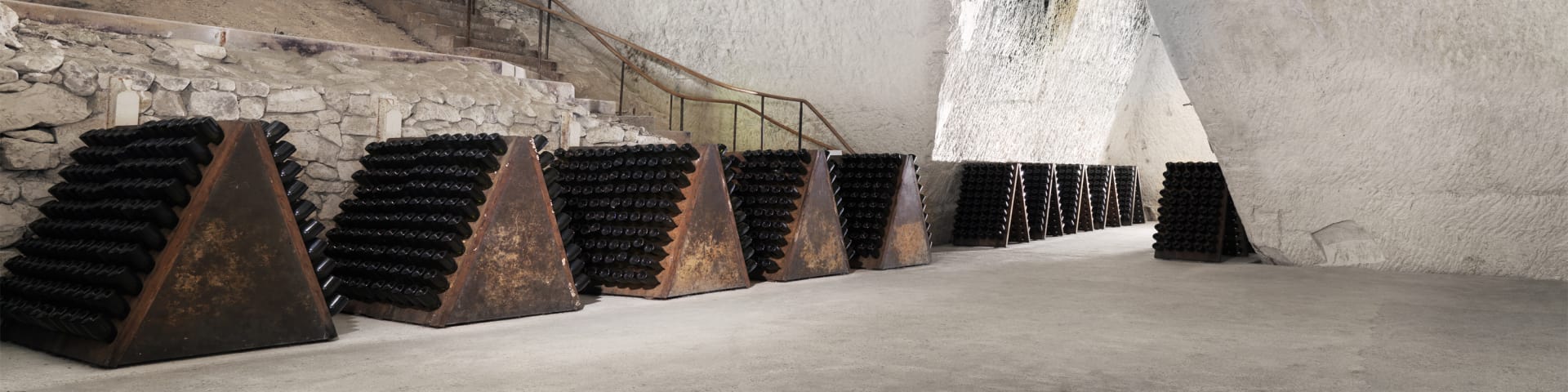


Ruinart Blanc de Blancs is the emblem of the House, and it is the perfect expression of the Ruinart taste. It is comprised of 100% Chardonnay grapes grown primarily with Premiers Crus from the Côte de Blancs and Montagne de Reims terroirs, both prized for their aromatic finesse.

A term typically reserved for Champagne and Sparkling Wines, non-vintage or simply “NV” on a label indicates a blend of finished wines from different vintages (years of harvest). To make non-vintage Champagne, typically the current year’s harvest (in other words, the current vintage) forms the base of the blend. Finished wines from previous years, called “vins de reserve” are blended in at approximately 10-50% of the total volume in order to achieve the flavor, complexity, body and acidity for the desired house style. A tiny proportion of Champagnes are made from a single vintage.
There are also some very large production still wines that may not claim one particular vintage. This would be at the discretion of the winemaker’s goals for character of the final wine.

Associated with luxury, celebration, and romance, the region, Champagne, is home to the world’s most prized sparkling wine. In order to bear the label, ‘Champagne’, a sparkling wine must originate from this northeastern region of France—called Champagne—and adhere to strict quality standards. Made up of the three towns Reims, Épernay, and Aÿ, it was here that the traditional method of sparkling wine production was both invented and perfected, birthing a winemaking technique as well as a flavor profile that is now emulated worldwide.
Well-drained, limestone and chalky soil defines much of the region, which lend a mineral component to its wines. Champagne’s cold, continental climate promotes ample acidity in its grapes but weather differences from year to year can create significant variation between vintages. While vintage Champagnes are produced in exceptional years, non-vintage cuvées are produced annually from a blend of several years in order to produce Champagnes that maintain a consistent house style.
With nearly negligible exceptions, . These can be blended together or bottled as individual varietal Champagnes, depending on the final style of wine desired. Chardonnay, the only white variety, contributes freshness, elegance, lively acidity and notes of citrus, orchard fruit and white flowers. Pinot Noir and its relative Pinot Meunier, provide the backbone to many blends, adding structure, body and supple red fruit flavors. Wines with a large proportion of Pinot Meunier will be ready to drink earlier, while Pinot Noir contributes to longevity. Whether it is white or rosé, most Champagne is made from a blend of red and white grapes—and uniquely, rosé is often produce by blending together red and white wine. A Champagne made exclusively from Chardonnay will be labeled as ‘blanc de blancs,’ while ones comprised of only red grapes are called ‘blanc de noirs.’