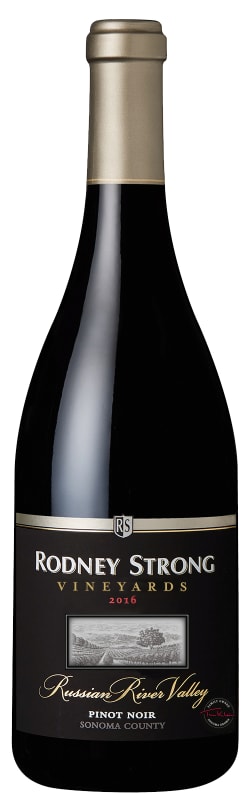


Winemaker Notes
Enjoy this Pinot Noir now with charcuterie, wild mushroom risotto and grilled pork tenderloin.
Professional Ratings
-
Wine Enthusiast
Bright in acidity and cradled moderate oak, this wine shows a crunchiness to the tannins and bright bursts of cranberry, pomegranate and orange peel flavors. Elements of baking spice dot the finish, contrasting well against the rich fruit.
-
Wine Spectator
Refined, featuring lithe flavors of cherry tart and raspberry, with hints of nutmeg, all supported by medium-grained tannins and fresh acidity. Chocolate, spice and cream details emerge on the rich finish. Drink now through 2024.






Founded by wine industry pioneer, Rod Strong, in 1959, Rodney Strong Vineyards is now owned by the Kleins, a farming-based family that prides itself on land stewardship and a relentless push for superior wine quality from Sonoma County. After purchasing the company in 1989, Tom Klein began the endeavor that today brings together excellent vineyards, the industry's finest winemaking equipment, and exceptional talent. The winery farms and sources grapes from vineyards throughout Sonoma County, focusing on Alexander Valley, Russian River Valley and Chalk Hill. Rodney Strong Vineyards is best known for its estate-bottled and vineyard-designated wines, and is also recognized for their sustainable and Fish Friendly Farming, dedication to solar energy production and becoming carbon neutral in 2009.

While the Russian River Valley is a large appellation with multiple climate zones and soil types, it is best known for cool-climate varieties, with Pinot Noir as the most celebrated. The grapes benefit from a reliable late afternoon flow of Pacific Ocean fog through the Petaluma Gap and along the Russian River Valley that ensures slow and steady ripening and the preservation of grape acidity. Today many of California’s most highly regarded Pinot Noir vineyards are in the Russian River Valley, along with its sub-appellation, Green Valley.
Historically Russian River Valley Pinot Noirs had bright red fruit and delicate earthy, mineral notes. But changes in viticultural and winemaking practices have led to stylistic changes in some of the region’s wines. Adjustments to canopy management, among other techniques, have resulted in riper fruit and bolder wines as well. These show flavors of black cherry, blackberry, cola, spice and darker, loamy earth tones, accenting traditional Pinot Noir notes of strawberry, raspberry and light cherry.