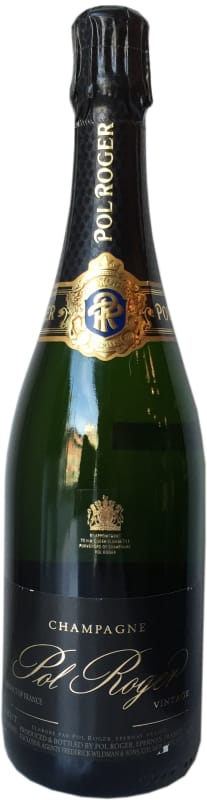


Winemaker Notes
The Brut Vintage 2009 enhances fine dishes of distinctive character, like chicken with a foie gras stuffing, capon with morel mushrooms, chicken supreme...
Professional Ratings
-
Wine Enthusiast
The latest vintage release from this producer, this is beautifully balanced with white fruits and touches of citrus paralleled by a tight mineral texture and acidity. It is still young, because vintages from this producer age for many years. Drink from 2020.
Cellar Selection -
James Suckling
A fullish style with savory aromas of almond cream, nougat and grilled hazelnuts, as well as dried lemon and pastry. The palate is smoothly arranged with layers of savory, lees-fueled pastry flavors. Drink or hold.
-
Robert Parker's Wine Advocate
The 2009 Brut Vintage blends 60% Pinot Noir and 40% Chardonnay from 20 grand and premier cru villages in the Montagne de Reims and the Côte des Blancs. Fermented in stainless steel with each variety and each village kept separate and malolactic completed, the 2009 aged eight years in the cellars before being hand-riddled and disgorged. Disgorged in October 2017 and tasted in June 2018, the 2009 shows an intense, concentrated, pretty vinous and profound bouquet of ripe fruit, chalk, brioche and nutty/almond notes. Full-bodied and rich but fresh and even refined on the palate, this is a very elegant, round, charming yet well-structured and vinous Vintage Brut with a clear, fresh, structured and remarkably persistent finish. It drinks already very well today, but its aging potential is most probably stunning.
-
Wine & Spirits
Pol Roger’s house style emphasizes pinot noir; this bottling is 60 percent pinot noir, the balance chardonnay. It’s a selection from grand cru and premier cru sites in the Montagne de Reims and the Côte des Blancs. The pedigree of the fruit and the ripeness of the vintage comes through in the wine’s flavor intensity, enriched by malolactic fermentation, creating a contrast of brightness and broad, toasty flavors. That elegant richness and red-fruit undertone makes this a dinner wine to serve with white truffle risotto.
-
Wine Spectator
This balanced Champagne shows a lovely creaminess, offering a mix of crème de cassis, pastry dough and preserved lemon flavors. Fresh, with light minerality on the open-knit finish. Drink now through 2025.


Representing the topmost expression of a Champagne house, a vintage Champagne is one made from the produce of a single, superior harvest year. Vintage Champagnes account for a mere 5% of total Champagne production and are produced about three times in a decade. Champagne is typically made as a blend of multiple years in order to preserve the house style; these will have non-vintage, or simply, NV on the label. The term, "vintage," as it applies to all wine, simply means a single harvest year.

Associated with luxury, celebration, and romance, the region, Champagne, is home to the world’s most prized sparkling wine. In order to bear the label, ‘Champagne’, a sparkling wine must originate from this northeastern region of France—called Champagne—and adhere to strict quality standards. Made up of the three towns Reims, Épernay, and Aÿ, it was here that the traditional method of sparkling wine production was both invented and perfected, birthing a winemaking technique as well as a flavor profile that is now emulated worldwide.
Well-drained, limestone and chalky soil defines much of the region, which lend a mineral component to its wines. Champagne’s cold, continental climate promotes ample acidity in its grapes but weather differences from year to year can create significant variation between vintages. While vintage Champagnes are produced in exceptional years, non-vintage cuvées are produced annually from a blend of several years in order to produce Champagnes that maintain a consistent house style.
With nearly negligible exceptions, . These can be blended together or bottled as individual varietal Champagnes, depending on the final style of wine desired. Chardonnay, the only white variety, contributes freshness, elegance, lively acidity and notes of citrus, orchard fruit and white flowers. Pinot Noir and its relative Pinot Meunier, provide the backbone to many blends, adding structure, body and supple red fruit flavors. Wines with a large proportion of Pinot Meunier will be ready to drink earlier, while Pinot Noir contributes to longevity. Whether it is white or rosé, most Champagne is made from a blend of red and white grapes—and uniquely, rosé is often produce by blending together red and white wine. A Champagne made exclusively from Chardonnay will be labeled as ‘blanc de blancs,’ while ones comprised of only red grapes are called ‘blanc de noirs.’