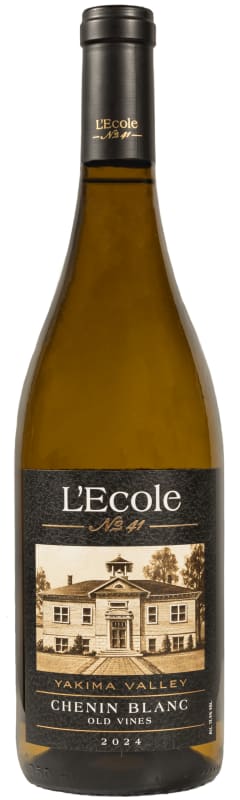


Winemaker Notes
With distinctive aromatics of white peach, Granny Smith apples, honeysuckle, and flint, this dry Chenin is vivid and lively. On the palate, an explosion of flavors unfolds, show casing stone fruit, magnolia, jasmine, and tangerine, offset by a remarkable note of salinity. The wine is snappy and interesting, carrying through to a flavorful and vibrant mouth-watering finish.
Professional Ratings
-
Jeb Dunnuck
The old vines in the 2024 Chenin Blanc Old Vines were planted in the 1970s, the grapes sourced from Willard Farms, Phil Church, and Upland. The wine spent time only in stainless steel. Inviting aromatics of peach and apricot follow through on the palate, along with a twist of green olive. The texture is creamy and long-lived. This is a nicely made, light-bodied wine that will continue to be enjoyable another 5-7 years.
-
James Suckling
Fragrant notes of jasmine, sliced pears and golden apples waft from the glass. It’s bright and creamy with a medium body. Pretty floral and mineral undertones to the fresh fruit.
-
Vinous
More savory than sweet, the 2024 Chenin Blanc Yakima Valley opens with zests of lime and crushed green apple, complicated by savory herbal tones and hints of wet stone. It is round and soft-textured with a distinct saltiness within, as citrus-laced green apple fruits cascade throughout. It finishes clean and crisp, leaving a subtle minty sensation and saline tinge.


Unquestionably one of the most diverse grape varieties, Chenin Blanc can do it all. It shines in every style from bone dry to unctuously sweet, oaked or unoaked, still or sparkling and even as the base for fortified wines and spirits. Perhaps Chenin Blanc’s greatest asset is its ever-present acidity, maintained even under warm growing conditions. Somm Secret—Landing in South Africa in the mid 1800s, today the country has double the acreage of Chenin Blanc planted compared to France. There is also a new wave of dedicated producers committed to restoring old Chenin vines.

As the first recognized wine-growing region in the Pacific Northwest, Yakima Valley is centrally located within Washington’s vast Columbia Valley. The region also includes Washington’s oldest Cabernet Sauvignon vines, Otis Vineyard, planted in 1957, and Harrison Hill Vineyard, planted in 1963. Yakima Valley contains three smaller sub-regions: Rattlesnake Hills, Red Mountain, and Snipes Mountain and is ideal for both red and white wine production. In fact, Yakima Valley is Washington’s most diverse region, boasting more than 40 different grape varieties over about one hundred miles.
The cooler parts of the valley are home to almost half of the Chardonnay and Riesling produced in the state! Both are made in a wide range of styles depending on the conditions of the vineyard site.
But its warmer locations yield a large proportion of Washington’s best Merlot, Syrah and Cabernet Sauvignon. The finest Yakima Valley reds are jam-packed full of red cherry, currant, raspberry or blackberry fruit, as well as cocoa, herb, spice and savory notes, and exhibit a supple texture, great body, focus and length.