

Winemaker Notes
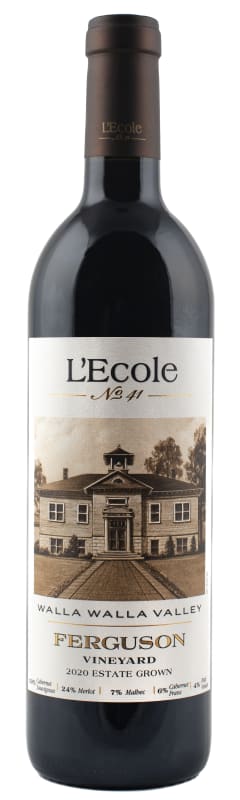
Blend: 59% Cabernet Sauvignon, 24% Merlot, 7% Malbec, 6% Cabernet Franc, 4% Petit Verdot
Professional Ratings
-
Jeb Dunnuck
I'd put the 2020 Estate Ferguson Vineyard up with the top wines in the vintage. Revealing a deep plum/purple color to go with a darker, meaty bouquet of blackcurrants, smoked tobacco, leather, and truffly earth, it hits the palate with full-bodied richness, a pure, elegant, layered mouthfeel, lots of building tannins, and a great finish. This structured, serious, age-worthy blend will benefit from 2-4 years of bottle age and should evolve for 20 years in cold cellars.
-
James Suckling
“A firm and full-bodied red with aromas of chocolate, blueberries, cassis, spearmint and praline. Polished and complex, with muscular tannins that give sturdy support to the dense black fruit. 59% cabernet sauvignon, 24% merlot, 7% malbec, 6% cabernet franc and 4% petit verdot.”
-
Decanter
A wine of structure from the Ferguson Vineyard and Walla Walla's iconic L'Ecole No 41 shows ample tannin and savoury yet full-bodied character. Aromas of dried violets, fig and blackberry compote meld with savoury herbs and whiffs of stone-driven minerals. The palate shows bay leaf and eucalyptus underlining stewed blue fruits, barrel spice and pencil lead. This wine definitely needs time to come into itself.
-
Robert Parker's Wine Advocate
The 2020 Ferguson Vineyard, composed of 59% Cabernet Sauvignon, 24% Merlot, 7% Malbec, 6% Cabernet Franc and 4% Petit Verdot, impresses with its freshness. This Cabernet-dominant blend unfolds as a juicy, firm and tightly wound composition. Medium to full-bodied profile and balanced on the palate, it has a succulent and firm mouthfeel marked by fine-grained tannins. Rating: 94+
-
Wine Enthusiast
I love the sweet and powdery aroma that smells like blackcap raspberries got their own bubble gum. Earth and blood orange scents are a bonus. Blueberry gelato, dark chocolate and aged balsamic vinegar flavors seal the deal. Muscular tannins create a chewy texture.
-
Wine Spectator
Handsomely structured, with refined currant, bittersweet mocha, black olive and stony mineral accents that persist toward medium-grained tannins. Cabernet Sauvignon, Merlot, Malbec, Cabernet Franc and Petit Verdot. Drink now through 2030. 1,300 cases made.


One of the world’s most classic and popular styles of red wine, Bordeaux-inspired blends have spread from their homeland in France to nearly every corner of the New World. Typically based on either Cabernet Sauvignon or Merlot and supported by Cabernet Franc, Malbec and Petit Verdot, the best of these are densely hued, fragrant, full of fruit and boast a structure that begs for cellar time. Somm Secret—Blends from Bordeaux are generally earthier compared to those from the New World, which tend to be fruit-dominant.

Responsible for some of Washington’s most highly acclaimed wines, the Walla Walla Valley has experienced a surge in popularity in recent years and is home to both historic wineries and younger, up-and-coming producers.
The Walla Walla Valley, a Native American name meaning “many waters,” is located in southeastern Washington; part of the appellation actually extends into Oregon. Soils here are well-drained, sandy loess over Missoula Flood deposits and fractured basalt.
It is a region perfectly suited to Rhône-inspired Syrahs, distinguished by savory notes of red berry, black olive, smoke and fresh earth. Cabernet Sauvignon and Merlot create a range of styles from smooth and supple to robust and well-structured. White varieties are rare but some producers blend Sauvignon Blanc with Sémillon, resulting in a rich and round style, and plantings of Viognier, while minimal, are often quite successful.
Of note within Walla Walla, is one new and very peculiar appellation, called the Rocks District of Milton-Freewater. This is the only AVA in the U.S. whose boundaries are totally defined by the soil type. Soils here look a bit like those in the acclaimed Rhône region of Chateauneuf-du-Pape, but are large, ancient, basalt cobblestones. These stones work in the same way as they do in Chateauneuf, absorbing and then radiating the sun's heat up to enhance the ripening of grape clusters. The Rocks District is within the part of Walla Walla that spills over into Oregon and naturally excels in the production of Rhône varieties like Syrah, as well as the Bordeaux varieties.