


Winemaker Notes
Concentrated white currants, lemons, limes and grapefruit zest, with hints of frangipani and green peppercorns. The palate is pure and bursting with ripe limes and succulent white currant flavors, with layered mineral talc-like texture and pure lines of zesty acidity for a very long, fine, dry finish.
Professional Ratings
-
Decanter
Sourced from both younger and older vine parcels at 500m on sandy loam over gravel with some clay. It's from a milder year with good rainfall, wed to classic, protective winemaking that's produced terrific purity, persistence and perfume. Exotic lemongrass and kaffir lime notes mingle with fresh, zesty, juicy finger lime and crisp apple on a distinctly saline palate. It's vibrant but focused, with a chalky finish and whetstone tang.
Drinking Window 2018 - 2032
-
James Suckling
A very citrusy riesling with lime and green apples, as well as more floral elements in the form of cherry blossoms and chalk undertones. Linear and taut on the palate with steely acidity and no shortage of green fruit. A finely spiced finish.
-
Robert Parker's Wine Advocate
Sourced from vines planted in the 1960s, the 2017 Julius Riesling features scents of lime blossoms and green apples. It's medium-bodied and seems soft and round upon first glance, with hints of peach leading a lovely integration of fruit and acidity. While already charming, it appears to have the backbone to support a decade or so of aging.
-
Wine Enthusiast
This wine sings a quiet tune of lime, flower blossoms, orange peel and talc. The talc continues on the palate in the form of a powdery texture and the delicate citrus flavors are enhanced by mouthwatering acidity
-
Wine & Spirits
This is a fleshy, rich vintage of Julius, its scents of citrus blossom deepened by some smoky, vegetal tones. Julius typically begins to show itself six to eight years from the vintage; this wine’s stoniness and firm acidity suggest it will live for many years after that.
-
Wine Spectator
Vibrant and intense, offering a vivid mix of lanolin, lime and grapefruit flavors, with mouthwatering acidity and a lingering touch of orange blossom.


Riesling possesses a remarkable ability to reflect the character of wherever it is grown while still maintaining its identity. A regal variety of incredible purity and precision, this versatile grape can be just as enjoyable dry or sweet, young or old, still or sparkling and can age longer than nearly any other white variety. Somm Secret—Given how difficult it is to discern the level of sweetness in a Riesling from the label, here are some clues to find the dry ones. First, look for the world “trocken.” (“Halbtrocken” or “feinherb” mean off-dry.) Also a higher abv usually indicates a drier Riesling.
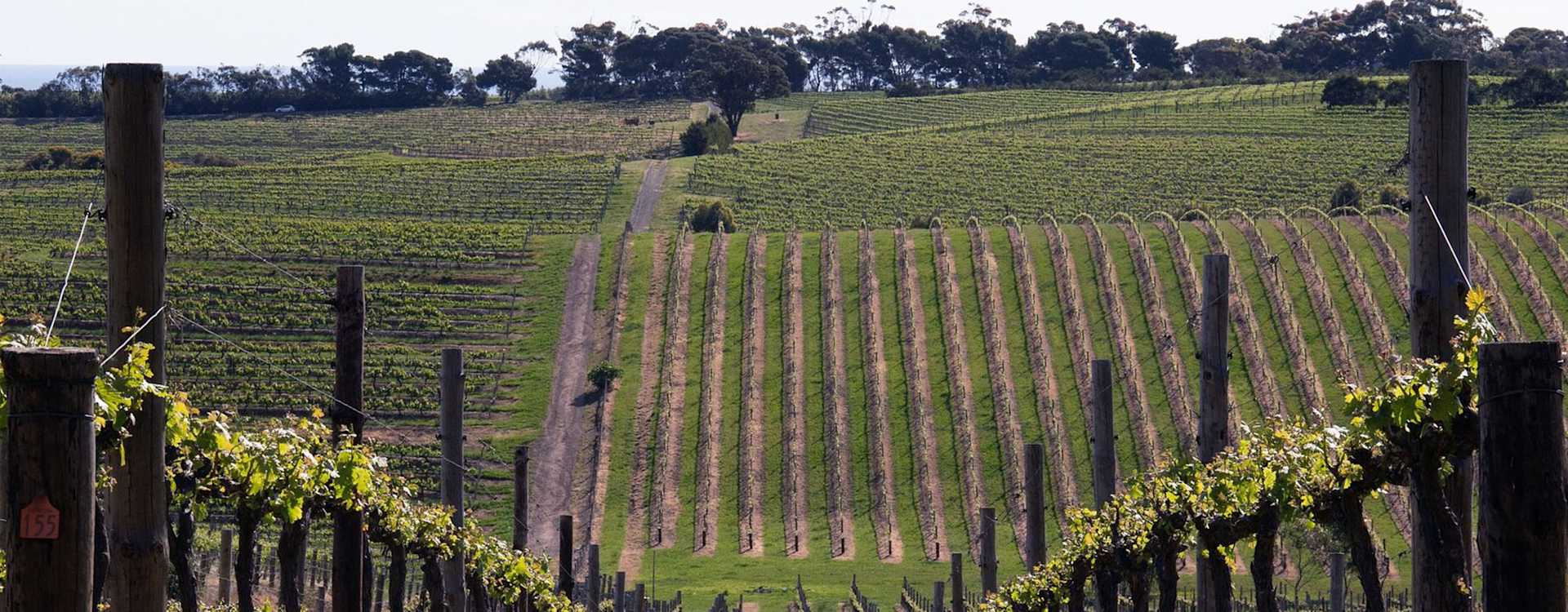
Higher in elevation and topographically more dramatic than the Barossa Valley floor, Eden Valley abuts it to its south and east. While it is a bit of an extension of Barossa, Eden Valley is topographically different than the pastoral Barossa Valley, and is composed of rocky hills and eucalyptus groves.
Recognizing Eden Valley’s potential with Riesling in the 1960s and 70s, producers started to move their Riesling production from Barossa to these better sites where schist soils on hilltops would produce more steely, tart and age-worthy examples. A most famous site, planted by Colin Gramp, called Steingarten, today produces one of the most outstanding Australian Rieslings. Youthful Eden Valley Rieslings express floral, grapefruit and mineral, while with time in the bottle, they become increasingly toasty and complex.
Riesling isn’t the only grape the region can grow; undeniably at lower altitudes Shiraz does very well. Mount Edelstone is a notable vineyard as well as the Hill of Grace, which boasts healthy Shiraz vines well over 100 years old. This is the only Australian region where Merlot has a made a name for itself and Chardonnay can be spectacular, particularly from the High Eden subregion in the southern valley.