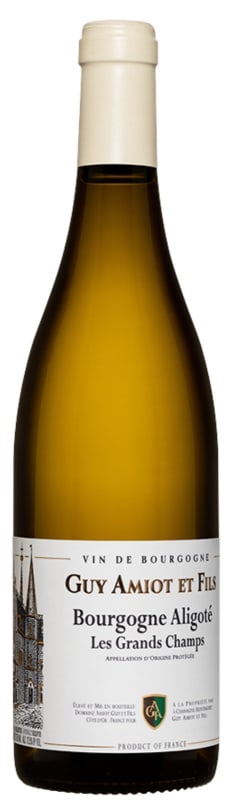


Winemaker Notes
The color is pale golden, with brilliant green-gold highlights. The nose is generouswith two dominant characteristics, floral and fruity. On the palate the wine is supple, with apersistence characterized by a nervous freshness. Aligoté is sometimes known as the “other whitegrape” of Burgundy. Its most famous use is that of the base of a kir cocktail, which is commonplacein the bistros and cafés of Beaune. It is rare to see very old vines of Aligoté such as Amiot’s. Thecombination of old vines and a touch of oak yields a complex, refreshing white Burgundy in its ownright - no cassis necessary.


A native but unique white grape to Burgundy, Aligoté is a light bodied white that often ends up unfairly lost in Chardonnay’s shadow. In Côte Chalonnaise, in a quaint village named Bouzeron, just south of the Côte de Beaune, Aligoté has its very own appellation where yields are limited in order to enhance flavors, acidity and overall quality. Somm Secret—Curiously, the famous producer, Domaine Ponsot, bottles a 100% Aligoté from its Premier Cru in Morey-Ste-Denis, Les Monts Luisants, made from Aligoté vines planted in 1911.

A classic source of exceptional Chardonnay as well as Pinot Noir, the Côte de Beaune makes up the southern half of the Côte d’Or. Its principal wine-producing villages are Pernand-Vergelesses, Aloxe-Corton, Beaune, Pommard, Volnay, Meursault, Puligny-Montrachet and Chassagne-Montrachet.
The area is named for its own important town of Beaune, which is essentially the center of the Burgundy wine business and where many negociants center their work. Hospices de Beaune, the annual wine auction, is based here as well.