


Winemaker Notes
Graham’s 2017 LBV has a lovely honeysuckle fragrance as well as hints of mint, which is often present in Graham’s wines. In the background, there are also some attractive, bright tropical fruit notes. Typically Graham’s on the palate with sumptuous ripe black fruit flavours combining with hints of kirsch. The fine-grained tannins give the wine balance and structure, whilst good acidity underscores the wine’s freshness.
The Graham’s 2017 can be enjoyed anytime and pairs wonderfully with dark chocolate desserts as well as semi-cured and cured cheeses like Cheddar and Manchego.
Professional Ratings
-
Wine Enthusiast
The Port, with its luscious texture and black fruits, is impressive and dense. Black fruits are given richness and spice by the spirit and the raisin flavors. With its light structure, it is ready to drink.
-
Wine Spectator
Inviting, with plum cake and steeped raisin and plum notes laced with licorice snap and fruitcake accents. There's a solid spine for support, but this is approachable now. Try decanting or even giving a touch more time in the cellar.
-
Robert Parker's Wine Advocate
The 2017 Late Bottled Vintage Port is a field blend bottled in 2022 with a bar-top cork and 113 grams per liter of residual sugar after six years in cask. (There will be no 2016 Graham's LBV.) Elegant in the mid-palate (unlike its sibling, the Dow's), this also has good structure, but it is a much better balanced wine. The big fruit of this fine vintage shines through, rendering this rather delicious. This has persistence and focus, plus all that tasty fruit. You can't go wrong. Beat after 2022.
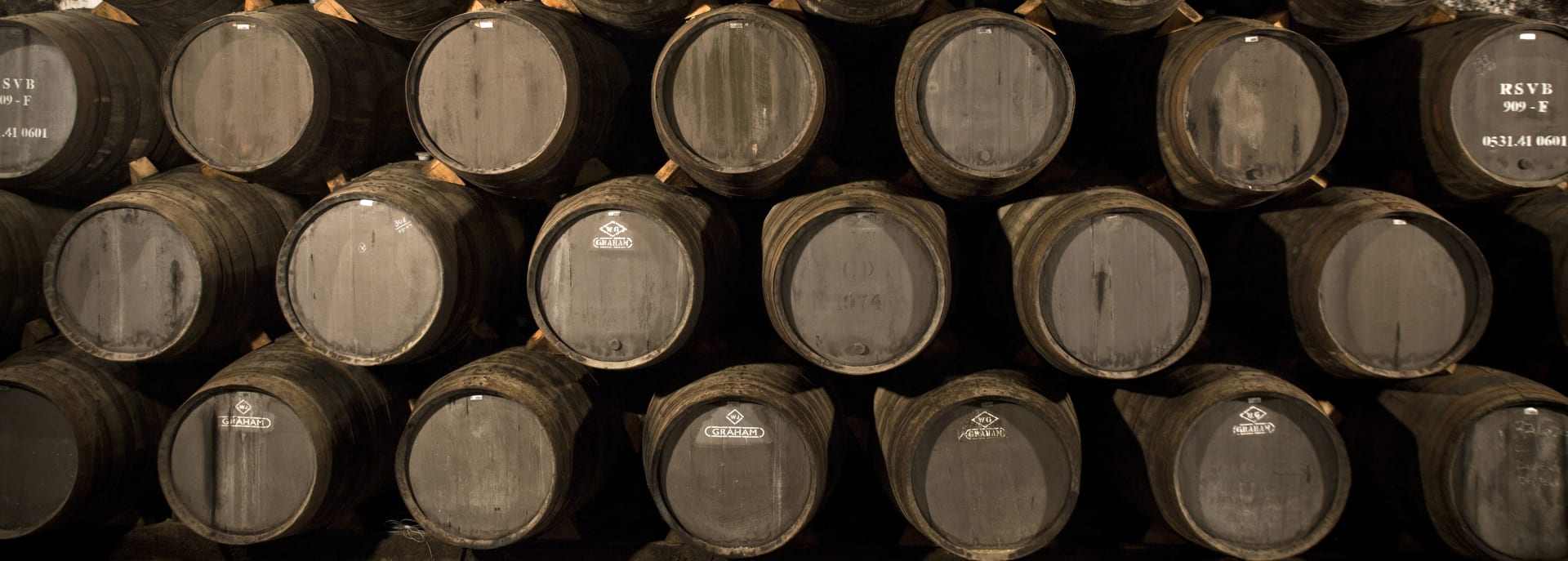


Tradition, experience and knowledge spanning two centuries have given Graham’s the values that are at the heart of the company’s philosophy. The Graham family motto Ne Oublie (forget not or never forget) perfectly encapsulates the company’s commitment to the Douro Region, born of a deep respect for the past.
Founded in 1820, Graham’s produced some of the greatest Ports of the 20th century, amongst which the 1927, 1935, 1945, 1970 and 2000 Vintages. In 1970 the company changed ownership from the founding family to the Symingtons, who have themselves been Port producers since 1882, however through their Anglo-Portuguese great-grandmother, they can trace their Port heritage back to 1652. Graham’s owns some of the finest vineyards in the Douro Valley, one of the oldest demarcated wine regions in the world and a Unesco World Heritage Site.
The four properties are: Quinta dos Malvedos, Quinta do Tua, Quinta da Vila Velha and Quinta do Vale de Malhadas. Combined, these four mountain estates total 201 hectares of vineyards, located in different areas of the Upper Douro and the Douro Superior, each making distinctive wines that contribute to Graham’s singular character and style.

Port is a sweet, fortified wine with numerous styles: Ruby, Tawny, Vintage, Late Bottled Vintage (LBV), White, Colheita, and a few unusual others. It is blended from from the most important red grapes of the Douro Valley, based primarily on Touriga Nacional with over 80 other varieties approved for use. Most Ports are best served slightly chilled at around 55-65°F. To learn more, see our full Port Wine Guide

The home of Port—perhaps the most internationally acclaimed beverage—the Douro region of Portugal is one of the world’s oldest delimited wine regions, established in 1756. The vineyards of the Douro, set on the slopes surrounding the Douro River (known as the Duero in Spain), are incredibly steep, necessitating the use of terracing and thus, manual vineyard management as well as harvesting. The Douro's best sites, rare outcroppings of Cambrian schist, are reserved for vineyards that yield high quality Port.
While more than 100 indigenous varieties are approved for wine production in the Douro, there are five primary grapes that make up most Port and the region's excellent, though less known, red table wines. Touriga Nacional is the finest of these, prized for its deep color, tannins and floral aromatics. Tinta Roriz (Spain's Tempranillo) adds bright acidity and red fruit flavors. Touriga Franca shows great persistence of fruit and Tinta Barroca helps round out the blend with its supple texture. Tinta Cão, a fine but low-yielding variety, is now rarely planted but still highly valued for its ability to produce excellent, complex wines.
White wines, generally crisp, mineral-driven blends of Arinto, Viosinho, Gouveio, Malvasia Fina and an assortment of other rare but local varieties, are produced in small quantities but worth noting.
With hot summers and cool, wet winters, the Duoro has a maritime climate.