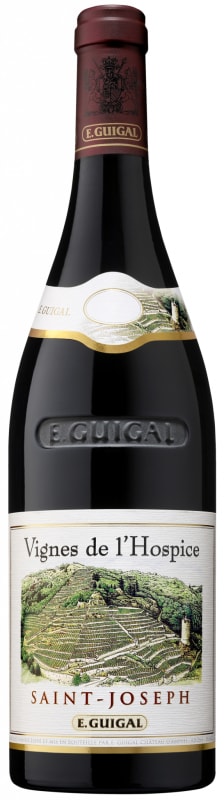


Winemaker Notes
Professional Ratings
-
Jeb Dunnuck
The finest vintage of this cuvée I've tasted, the 2020 Saint Joseph Vignes De L'Hospice is a dead-ringer for an Hermitage from the Bessards lieu-dit and reveals a dense purple hue as well as insane aromatics of pure crème de cassis, lit gunpowder, crushed stone, graphite, and truffle, with a liquid violet-like floral character. Full-bodied, massively concentrated, deep, powerful, and muscular on the palate, it nevertheless stays flawlessly balanced, has ultra-fine tannins, and a regal, structured, age-worthy style. It might be the finest Saint Joseph I've ever tasted, and I might be underrating this beauty by a point. It should hit prime time in 7-8 years and have 30 years of overall longevity. This is a legendary Saint Joseph that you should have in your cellar.
-
James Suckling
Amazing nose of candied orange, ripe blackberry and smoke. Great balance of richness, precisely contoured fine tannins and strident minerality. Very long complex finish with so much smoky mystery. From a three-hectare single-vineyard that faces the hill of Hermitage from the opposite bank of the Rhone. Matured for 30 months in 100% small new oak casks.
-
Robert Parker's Wine Advocate
The 2020 Saint-Joseph Vignes de l'Hospice is more muscular than the Lieu-Dit Saint-Joseph, opening with a deep and complex bouquet of smoke, dark berries, spices, iris and violet, intertwined with delicate notes of mulberry. Full-bodied, dense and structured, it’s rich and ample, its controlled power framed by a firm chassis of ripe tannins, concluding with a long, mineral, pencil-lead-inflected finish. Rating: 94+
-
Wine Spectator
A polished, richly styled red, with a warm robe of toasty oak and mesquite smoke wrapped around black cherry compote, spiced fig and mocha flavors. Shows singed incense and green herbs, which add refreshing detail through the dense, chewy palate. Reveals refined tannins, which are firm yet nicely meshed into the lavish, well-integrated texture. Dense and meaty.



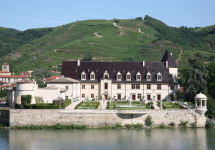
The Guigal domain was founded in 1946 by Etienne Guigal in the ancient village of Ampuis, home of the wines of the Côte-Rôtie. In these vineyards that are over 2400 years old, you can still see the small terraced walls characteristic of the Roman period. Etienne Guigal arrived in this region in 1923 at the age of 14. He made wine for over 67 vintages and, at the beginning of his career, participated in the development of the Vidal-Fleury establishment.
Despite his young age, Marcel Guigal took over from his father in 1961 when the latter was victim to a brutal illness rendering him blind. Marcel's hard work and perseverance enabled the Guigals to buy out Vidal-Fleury in 1984, although the establishment retains its own identity and commercial autonomy. In 2000, the Guigals purchased the Jean-Louis Grippat estate in Saint-Joseph and Hermitage, as well as the Domaine de Vallouit in Côte-Rôtie, Hermitage, Saint-Joseph and Crozes-Hermitage.
In the cellars of the Guigal estate in Ampuis, the northern appellations of the Rhône Valley are produced and aged. These are the appellations of Côte-Rôtie, Condrieu, Hermitage, Saint-Joseph and Crozes-Hermitage. The great appellations of the Southern Rhône, Chateauneuf-du-Pape, Gigondas, Tavel and Côtes-du-Rhône, are also aged in the Ampuis cellars.

Marked by an unmistakable deep purple hue and savory aromatics, Syrah makes an intense, powerful and often age-worthy red. Native to the Northern Rhône, Syrah achieves its maximum potential in the steep village of Hermitage and plays an important component in the Red Rhône Blends of the south, adding color and structure to Grenache and Mourvèdre. Syrah is the most widely planted grape of Australia and is important in California and Washington. Sommelier Secret—Such a synergy these three create together, the Grenache, Syrah, Mourvedre trio often takes on the shorthand term, “GSM.”

Spanning the longest stretch of river in the northern Rhône—from Condrieu in the north, to Cornas in the south—the heart of St.-Joseph lies directly across the Rhône River from Hermitage. While its soils are basically the same as Hermitage: granite, supplemented by sand and gravel, its east facing slope receives less sunlight than Hermitage, which causes less overall berry ripening on its Syrah vines. However, some of the best of them can rival any fine expression of Hermitage, Cote-Rotie or Cornas with concentrated black fruits, dark spices, crushed rock and violets. A general advantage of the region is that its Syrahs typically don’t need as much time in the bottle compared to a Cote-Rotie or Hermitage and are much easier on the bank account!
A textbook St.-Joseph red is firm with a core of minerality that is enhanced by savory and peppery qualities. Aromas and flavors of smoke, olives, herbs, and violets are common; its wines are dense in red and black fruit.
St.-Joseph is also a source of fine northern Rhône white wine. Viognier, Marsanne and Roussanne grow well here and can be blended or made into single varietal wines. St.-Joseph whites are full and silky with citrus, pear and pineapple flavors and a rich bouquet reminiscent of honeysuckle, toasted nuts, spice and caramel.