


Winemaker Notes
Spice notes in the nose precede a complex, powerful palate with round tannins. It's an unctuous wine, harmonious and balanced, with notes of mature plums and hazelnuts.
Professional Ratings
-
James Suckling
A beautifully rounded Chateauneuf with plenty of black and red berry aromas wrapped around a core of fine tannins. Delicate spices and a touch of candied citrus peel expand as the wine aerates. Good length in the silky finish. With this balance and freshness, the wine should age very well. Drink or hold.
-
Vinous
Dried herbs, ripe strawberry and licorice introduce the 2020 Châteauneuf-du-Pape. Almost equally as forward and flamboyant as the delicious 2019, the 2020 is a supple and concentrated red that’s built for the long haul. It offers good length on the savory conclusion.
Barrel Sample: 91-93 -
Jeb Dunnuck
Beautiful red and black cherry fruit, spice, and peppery garrigue notes all emerge from the 2020 Châteauneuf Du Pape, which is based on 70% Grenache, 15% Syrah, 10% Mourvèdre, and 5% other varieties. Medium-bodied, supple, and elegant, with good balance and texture, it spent 36 months in large oak foudres.
-
Robert Parker's Wine Advocate
Charming and enveloping, the 2020 Châteauneuf-du-Pape from Guigal is a true classic of the vintage, marrying power with elegance. It wafts from the glass with aromas of dark cherries, mulberries, iris and spring flowers. Medium- to full-bodied, round and fleshy, it’s built around a sweet core of fruit framed by velvety tannins, concluding with a long, graceful and gently ethereal finish. This is a beautifully balanced wine that will age gracefully over the next decade and beyond. Rating: 92+
-
Wine Spectator
A strappy, chewy, textured version, with notes of earth, cigar box and mocha atop a chewy base of dried cherry and currant, plus toasted anise and ablast of menthol freshness. Graphite shaving accents bring density and more weight to the substantial finish, cast in iron. Grenache, Mourvèdre and Syrah.



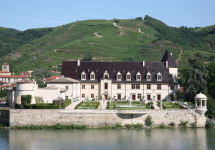
The Guigal domain was founded in 1946 by Etienne Guigal in the ancient village of Ampuis, home of the wines of the Côte-Rôtie. In these vineyards that are over 2400 years old, you can still see the small terraced walls characteristic of the Roman period. Etienne Guigal arrived in this region in 1923 at the age of 14. He made wine for over 67 vintages and, at the beginning of his career, participated in the development of the Vidal-Fleury establishment.
Despite his young age, Marcel Guigal took over from his father in 1961 when the latter was victim to a brutal illness rendering him blind. Marcel's hard work and perseverance enabled the Guigals to buy out Vidal-Fleury in 1984, although the establishment retains its own identity and commercial autonomy. In 2000, the Guigals purchased the Jean-Louis Grippat estate in Saint-Joseph and Hermitage, as well as the Domaine de Vallouit in Côte-Rôtie, Hermitage, Saint-Joseph and Crozes-Hermitage.
In the cellars of the Guigal estate in Ampuis, the northern appellations of the Rhône Valley are produced and aged. These are the appellations of Côte-Rôtie, Condrieu, Hermitage, Saint-Joseph and Crozes-Hermitage. The great appellations of the Southern Rhône, Chateauneuf-du-Pape, Gigondas, Tavel and Côtes-du-Rhône, are also aged in the Ampuis cellars.

With bold fruit flavors and accents of sweet spice, Grenache, Syrah and Mourvèdre form the base of the classic Rhône Red Blend, while Carignan, Cinsault and Counoise often come in to play. Though they originated from France’s southern Rhône Valley, with some creative interpretation, Rhône blends have also become popular in other countries. Somm Secret—Putting their own local spin on the Rhône Red Blend, those from Priorat often include Merlot and Cabernet Sauvignon. In California, it is not uncommon to see Petite Sirah make an appearance.

Famous for its full-bodied, seductive and spicy reds with flavor and aroma characteristics reminiscent of black cherry, baked raspberry, garrigue, olive tapenade, lavender and baking spice, Châteauneuf-du-Pape is the leading sub-appellation of the southern Rhône River Valley. Large pebbles resembling river rocks, called "galets" in French, dominate most of the terrain. The stones hold heat and reflect it back up to the low-lying gobelet-trained vines. Though the galets are typical, they are not prominent in every vineyard. Chateau Rayas is the most obvious deviation with very sandy soil.
According to law, eighteen grape varieties are allowed in Châteauneuf-du-Pape and most wines are blends of some mix of these. For reds, Grenache is the star player with Mourvedre and Syrah coming typically second. Others used include Cinsault, Counoise and occasionally Muscardin, Vaccarèse, Picquepoul Noir and Terret Noir.
Only about 6-7% of wine from Châteauneuf-du-Pape is white wine. Blends and single-varietal bottlings are typically based on the soft and floral Grenache Blanc but Clairette, Bourboulenc and Roussanne are grown with some significance.
The wine of Chateauneuf-du-Pape takes its name from the relocation of the papal court to Avignon. The lore says that after moving in 1309, Pope Clément V (after whom Chateau Pape-Clément in Pessac-Léognan is named) ordered that vines were planted. But it was actually his successor, John XXII, who established the vineyards. The name however, Chateauneuf-du-Pape, translated as "the pope's new castle," didn’t really stick until the 19th century.